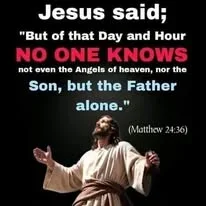
The New Testament explicitly applies Yahweh’s own titles, prerogatives, and worship to the Son—calling Him Lord in the fullest divine sense (Phil. 2:9–11; Rom. 10:9–13), identifying Him as the Alpha and Omega (Rev. 1:17; 22:13), and placing Him on the throne receiving the same worship as “the One who sits on the throne” (Rev. 5:13–14). Moreover, passages that speak of one Almighty God never isolate the Father in contrast to the Son; they affirm the unity of the Godhead, not a hierarchy of lesser deities (Deut. 6:4; John 10:30; 1 Cor. 8:6). To insist that only the Father may bear the divine name while the Son shares His throne, glory, works of creation, authority to judge, and universal worship is not fidelity to Scripture—it is an artificial restriction imposed on the text to avoid its clear Christological force (Isa. 44:24; John 1:3; Col. 1:16–17; John 5:22–23; Rev. 5:12–14).
Do you offer the same worship to Jesus as you do to “the One who sits on the throne”?