
The Trinity and all of its supporting doctrines are all circular in reasoning

Luke 18
13But the tax collector stood at a distance, unwilling even to lift up his eyes to heaven. Instead, he beat his breast and said, ‘God, have mercy on me, a sinner!’ 14I tell you, this man, rather than the Pharisee, went home justified. For everyone who exalts himself will be humbled, but the one who humbles himself will be exalted.”
So when will you humble yourself by realizing that Jesus does forgive sins after his resurrection?

Jesus personally restored and forgave Peter, who had denied Him three times, by reinstating him publicly in John 21:15–17, proving that the risen Jesus actively forgives sins and restores fallen disciples, confirming that forgiveness is a present, ongoing work of the resurrected Lord.

Also, in John 20:21–23, the risen Christ breathed on the disciples and declared, “If you forgive the sins of any, they are forgiven them,” a prerogative rooted in His own authority to forgive (Mark 2:7–10), which He now administers as the victorious Lord.
 
Right. Even the people of Judah were debating on the concept of the Two Powers in Heaven (a book title of Alan Segal). This means that a binitarian sense, if not trinary, is apparent in the Old Testament. This makes further sense as the same who became incarnate as Jesus.
The OT has God as a man talking to Abraham, and also God still in heaven at same time
 
Yes He did as we read in John 17:5. Only someone with an agenda, a bias could read John 17:5 and not come to that same conclusion. And that same shared glory between Them preexisted the creation of all things outlined in Genesis 1.
And Thomas And Stephen and peter and Paul and all other Apostles knew Jesus as their Lord and God
 
So, the angel that Yahweh sent as His messenger is actually Yahweh Himself ---- Are you saying that Yahweh is an angel?

and if the preincarnate Son is the 'angel of Yahweh' are you not agreeing with the JW's that Jesus was an angel?
No, as they see him as being Michael in OT, Angel of the Lord was a messenger for Yahweh who was Himself Yahweh
 
So, the angel that Yahweh sent as His messenger is actually Yahweh Himself ---- Are you saying that Yahweh is an angel?

and if the preincarnate Son is the 'angel of Yahweh' are you not agreeing with the JW's that Jesus was an angel?
Nope messenger does not mean created angel, but it can depending on the context
I didn't say messenger means created angel .... I asked you if you since you think the preincarnate Son is the 'angel of Yahweh' aren't you agreeing with the JW's that Jesus was an angel?
 
No, as they see him as being Michael in OT, Angel of the Lord was a messenger for Yahweh who was Himself Yahweh
I agree that the Angel of the LORD was a messenger FOR Yahweh -- one sent BY Yahweh --- which means he could not be Yahweh. The sender is not the one who is sent.
 
I agree that the Angel of the LORD was a messenger FOR Yahweh -- one sent BY Yahweh --- which means he could not be Yahweh. The sender is not the one who is sent.
It is amazing how the narration of these sort of incidents get it so confused by equating the two while not realizing that someone much later would point out the errors of the narration.
 
The term "son" in Jesus' time indicated someone with equal authority in the house to the father. A child was no greater than property (Gal 4:1-2). When the child became a son (as Jesus did when He went to the Temple at age 12), he becomes the equal of his father in authority within the household. This is why the Pharisees accused Him of blasphemy in that He made Himself equal with God (John 10:33).

Precisely. But that is inaccurate according to the Bible. God doesn't need to live it over and over. He saw it all from the beginning (Isa 46:10).
Saying you are the son of God does not make you God. It does put you in the same family to whatever the Father has. If you're a king then the son would be a prince and therefore share in the kingdom on equal ground pertaining to the kingdom. If your dad is a business owner then it would put you on equal ground in the family business to share in the wealth and even run the business later on. The Jews understood that custom and even we do today in our country.
 
It did to the Jewish high priest
Jesus had not been claiming to be God in the flesh and this is why the Jews never asked him at his trial if he was God in the flesh, but instead they asked him about what he had been claiming to be, which was the Messiah. Mark 14:61-62 records the High Priest asking “Are you the Christ, the Son of the Blessed?" And Jesus said "I am.” The High Priest tore his garments and said he deserved to be put to death when Jesus stated he was the Messiah. So we see that the Jews correctly assessed that Jesus had been claiming to be the Christ, and that Jesus indeed said he was the Christ, and also that the Jews thought his claim was worthy of the death penalty.
 
Jesus had not been claiming to be God in the flesh and this is why the Jews never asked him at his trial if he was God in the flesh, but instead they asked him about what he had been claiming to be, which was the Messiah. Mark 14:61-62 records the High Priest asking “Are you the Christ, the Son of the Blessed?" And Jesus said "I am.” The High Priest tore his garments and said he deserved to be put to death when Jesus stated he was the Messiah. So we see that the Jews correctly assessed that Jesus had been claiming to be the Christ, and that Jesus indeed said he was the Christ, and also that the Jews thought his claim was worthy of the death penalty.
If you stop reading this as a Jew who barely heard about Jesus and rarely encountered him, you would realize few even heard Jesus in encounters where he revealed his pre-existence. Start reading the text as someone who has heard the broader testimony from those who were his disciples.
Stop making excuses for the High Priest as tearing his clothes for an issue that is not, in itself, blasphemy. The claim of deity is what blasphemy is. Keep studying the passage until that makes sense.
 

Let's talk about if ye believe not that I am he...

John 8:24 is frequently argued that when Jesus said “I am he” that he meant “I am God”. But while the Lord often said “I am God” (Genesis 35:11, Psalm 46:10, Isaiah 43:12, etc.):

Jesus not only never uttered the words “I am God” but explicitly declared that only his Father is God (John 17:3).

Many people in the Bible said “I am he” (1 Samuel 4:16, 2 Samuel 20:17, Acts 10:21, etc.) - none of whom were claiming to be God.

Who is the "he" to whom Jesus was referring?

The Jews, in fact, asked him that very same question: Then said unto him "Who art thou?” - John 8:24. Obviously, they did not understand him to be claiming to be God. Jesus saith unto them "Even the same that I said unto you from the beginning” - John 8:25.

"From the beginning” Jesus had said that he was the mediator between God and man, the son of God, and the Messiah to Israel, meaning the Christ.

“(John 8:24) plainly holds forth an impossibility of salvation for those who believe not in Christ as the Mediator” - Matthew Poole's Commentary.

“I am he" - [meaning] I am the Messiah - Barnes' Notes on the Bible.

When Jesus said “I am he” he was not claiming to be God, but to be the anointed Savior of whom Old Testament prophecy had spoken.
 

Let's talk about if ye believe not that I am he...

John 8:24 is frequently argued that when Jesus said “I am he” that he meant “I am God”. But while the Lord often said “I am God” (Genesis 35:11, Psalm 46:10, Isaiah 43:12, etc.):

Jesus not only never uttered the words “I am God” but explicitly declared that only his Father is God (John 17:3).

Many people in the Bible said “I am he” (1 Samuel 4:16, 2 Samuel 20:17, Acts 10:21, etc.) - none of whom were claiming to be God.

Who is the "he" to whom Jesus was referring?

The Jews, in fact, asked him that very same question: Then said unto him "Who art thou?” - John 8:24. Obviously, they did not understand him to be claiming to be God. Jesus saith unto them "Even the same that I said unto you from the beginning” - John 8:25.

"From the beginning” Jesus had said that he was the mediator between God and man, the son of God, and the Messiah to Israel, meaning the Christ.

“(John 8:24) plainly holds forth an impossibility of salvation for those who believe not in Christ as the Mediator” - Matthew Poole's Commentary.

“I am he" - [meaning] I am the Messiah - Barnes' Notes on the Bible.

When Jesus said “I am he” he was not claiming to be God, but to be the anointed Savior of whom Old Testament prophecy had spoken.

Peterlag conveniently presents the weakest sense of Jesus saying "I am"

A deeper study shows
In the Hebrew original, God discloses himself in the repeated declaration, ‘I am he’ (Heb. ’anî hû’); it is this expression that the LXX consistently renders by egō eimi, formally ‘I am’. Isaiah 43:10 is especially close to Johannine language: ‘ “You are my witnesses,” declares the LORD, “and my servant whom I have chosen, so that you may know and believe me and understand that I am he.” ’ In Isaiah, the contexts demand that ‘I am he’ means ‘I am the same’, ‘I am forever the same’, and perhaps even ‘I am Yahweh’, with a direct allusion to Exodus 3:14 (cf. Is. 43:11–13). For others to apply this title to themselves was blasphemous, an invitation to face the wrath of God (Is. 47:8; Zp. 2:15). For Jesus to apply such words to himself is tantamount to a claim to deity, once it is clear that the other potential meanings of egō eimi are contextually impossible
D. A. Carson, The Gospel according to John, 343–344.
Peterlag also omits verse 58 that shows Jesus as having pre-existence before Abraham. Go figure.
 
👎 nope the angel of the Lord is not a created being but is identified as YHWH
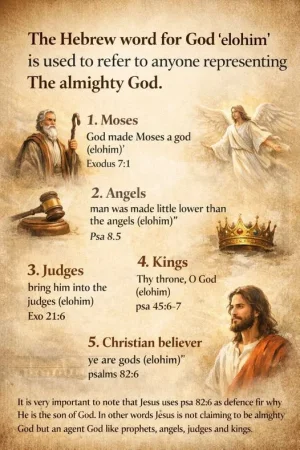
angels are created beings - the Angel of the LORD being an angel sent out on a mission by God - an agent of God who can utilize the prerogatives, authority, and name of God.

'of' is used as a function word to indicate origin or derivation; a preposition showing possession, origin, source, association. ----- the Angel of the LORD - the angel sent by God, Spirit of the LORD - the Spirit of God, aka God's Spirit, the word of the LORD, words originating from Him, the LORD'S words.
 
angels are created beings - the Angel of the LORD being an angel sent out on a mission by God - an agent of God who can utilize the prerogatives, authority, and name of God.

'of' is used as a function word to indicate origin or derivation; a preposition showing possession, origin, source, association. ----- the Angel of the LORD - the angel sent by God, Spirit of the LORD - the Spirit of God, aka God's Spirit, the word of the LORD, words originating from Him, the LORD'S words.
no He was the Messenger that was not a created angel.

this is no different in the NT in that the Father who is God sent the Son who is God to accomplish redemption.

in the OT it was the same Father sending the Son in the person/messenger of the Lord who is also called YHWH just like the Son in the NT is called YHWH/God.

hope this helps !!!
 
no He was the Messenger that was not a created angel.

this is no different in the NT in that the Father who is God sent the Son who is God to accomplish redemption.

in the OT it was the same Father sending the Son in the person/messenger of the Lord who is also called YHWH just like the Son in the NT is called YHWH/God.

hope this helps !!!
If Jesus was 'the Angel of the LORD' and as 'the Angel of the LORD' he spoke for Yahweh aka God ---

Let's see we have angels speaking for God - 'the message declared by angels proved to be reliable' (Heb. 2:2); we know that long ago God spoke to our fathers through the prophets but in THESE LAST DAYS He has spoken to us by his Son......But you are saying the Son was in the person/messenger of the LORD as the Angel of the LORD speaking in the OT???

I don't think so but hey you just keep on believing that Jesus was the Angel of the LORD in the OT ....... hope it helps!
 
If Jesus was 'the Angel of the LORD' and as 'the Angel of the LORD' he spoke for Yahweh aka God ---

Let's see we have angels speaking for God - 'the message declared by angels proved to be reliable' (Heb. 2:2); we know that long ago God spoke to our fathers through the prophets but in THESE LAST DAYS He has spoken to us by his Son......But you are saying the Son was in the person/messenger of the LORD as the Angel of the LORD speaking in the OT???

I don't think so but hey you just keep on believing that Jesus was the Angel of the LORD in the OT ....... hope it helps!
The simplest ideas get missed by the hyperliteralists.
The appearance of the Angel of the Lord was not as a prophet speaking judgment on the people. He appears to key figures in the OT usually to share a promise to them.
In those last days the Word is the preexisting One (likely seen as the Angel of the Lord in the OT) became incarnate and warned of judgment upon the people. The preexisting One received the promise along with Abraham in accord with Gal 3:16. It is sad to miss such vital details.
 
Back
Top Bottom