
You are using an out of date browser. It may not display this or other websites correctly.
You should upgrade or use an alternative browser.
You should upgrade or use an alternative browser.
The Trinity and all of its supporting doctrines are all circular in reasoning
- Thread starter Runningman
- Start date
unitarians are hyperliteralists but miss the obvious verses.Where do you get this idea that the logos was God?
Doug Brents
Active Member
John 1:1 - "In the beginning was the Word, and the Word was with God, and the Word was God."Where do you get this idea that the logos was God?
From Scripture!
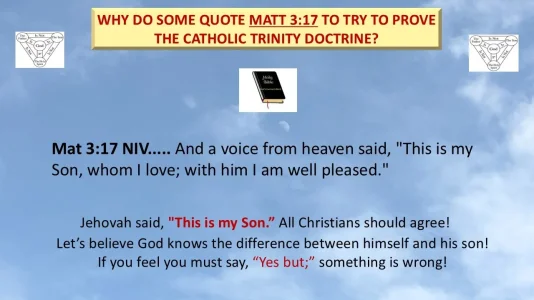
so the unitarian defies convention and says the Jesus does not have qualities of God just because his father is God.Matt 3:17 meme removed

Peterlag
Active Member
Okay, no I'm not refusing to believe Scripture like you say. John 1:1 does not say "In the beginning was Jesus." Jesus Christ is not a lexical definition of logos.John 1:1 - "In the beginning was the Word, and the Word was with God, and the Word was God."
From Scripture!
Doug Brents
Active Member
You asked why I believe the Logos is God. That is in John 1:1. Are we agreed now that the Logos is God?Okay, no I'm not refusing to believe Scripture like you say. John 1:1 does not say "In the beginning was Jesus." Jesus Christ is not a lexical definition of logos.
Then the next step to understand is:
John 1:1 doesn't say that the Logos is Jesus. But John 1:14 DOES!
John 1:14 - "And the Word became flesh, and dwelt among us; and we saw His glory, glory as of the only Son from the Father, full of grace and truth."
Jesus is the Son of God (Matt 3:17). And Jesus is the one whom John the Baptizer came as the forerunner to (John 1:29, 34).
Because Jesus is the Logos, and the Logos is God, that means that Jesus IS God.
A repeated hyperliteralist point shared without recognition of allegorical assignment. The hyperliteralist misses the obvious.Okay, no I'm not refusing to believe Scripture like you say. John 1:1 does not say "In the beginning was Jesus." Jesus Christ is not a lexical definition of logos.
Peterlag
Active Member
No John 1:1 does not say the logos is God. And neither does John 1:14.You asked why I believe the Logos is God. That is in John 1:1. Are we agreed now that the Logos is God?
Then the next step to understand is:
John 1:1 doesn't say that the Logos is Jesus. But John 1:14 DOES!
John 1:14 - "And the Word became flesh, and dwelt among us; and we saw His glory, glory as of the only Son from the Father, full of grace and truth."
Jesus is the Son of God (Matt 3:17). And Jesus is the one whom John the Baptizer came as the forerunner to (John 1:29, 34).
Because Jesus is the Logos, and the Logos is God, that means that Jesus IS God.
John 1:14 is not a teaching on the trinity or that we should believe or confess that Jesus is God. The "Word" is the wisdom, plan or purpose of God and the Word became flesh as Jesus Christ. Thus, Jesus Christ was the Word in the flesh, which is shortened to the Word for ease of speaking. Scripture is also the Word in writing. Everyone agrees that the Word in writing had a beginning. So did the Word in the flesh. In fact, the Greek text of Matthew 1:18 says that very clearly: "Now the beginning of Jesus Christ was in this manner..." The modern Greek texts all read "beginning" in Matthew 1:18. Birth is considered an acceptable translation since the beginning of some things is birth, and so most translations read birth. Nevertheless, the proper understanding of Matthew 1:18 is the beginning of Jesus Christ. In the beginning God had a plan, a purpose, which became flesh when Jesus was conceived.
The trinitarian has only 3 to pick from...
1.) Use a verse from a bad translation.
2.) Use a verse that is taken out of context.
3.) Not understand how the words were used in the culture they were written in.
And basically that's all trinitarians have. And I mean 100 percent of what they have. They have nothing else.
Doug Brents
Active Member
The Word is not JUST the "wisdom, plan, or purpose of God". The Word also IS God, just as John 1:1 says, and you said:No John 1:1 does not say the logos is God. And neither does John 1:14.
John 1:14 is not a teaching on the trinity or that we should believe or confess that Jesus is God. The "Word" is the wisdom, plan or purpose of God and the Word became flesh as Jesus Christ.
So if you are not refusing to believe what Scripture says, then you MUST believe that the Logos of God IS God (because that is what Scripture says about It). It is not just some "wisdom, plan, or purpose", but actually is God.Okay, no I'm not refusing to believe Scripture like you say.
Not in the same meaning of the word "word". Scripture is God's words, but it is not the Logos of God.Scripture is also the Word in writing.
Who was born first? John the Baptizer or Jesus? Who was conceived first? John the Baptizer or Jesus?Everyone agrees that the Word in writing had a beginning. So did the Word in the flesh. In fact, the Greek text of Matthew 1:18 says that very clearly: "Now the beginning of Jesus Christ was in this manner..."
The obvious answer to both of these is that John the Baptizer was the older of the two (by three months). So then, why and how could John the Baptizer say that Jesus existed before Him (John 1:30)? Jesus did not "begin" when He was born, nor when He was conceived. He existed before John, before Abraham, before Creation.
It seems that you do refuse to believe what Scripture says.
Good point. No prophet was described as saying "before an older person was born, I exist before him." This is shared in John 1:30 and when Jesus says "before Abraham was, I am." The wording would have to be "before Abraham was, scripture prophesied of someone like me." Peterlag won't see this though.The Word is not JUST the "wisdom, plan, or purpose of God". The Word also IS God, just as John 1:1 says, and you said:
So if you are not refusing to believe what Scripture says, then you MUST believe that the Logos of God IS God (because that is what Scripture says about It). It is not just some "wisdom, plan, or purpose", but actually is God.
Not in the same meaning of the word "word". Scripture is God's words, but it is not the Logos of God.
Who was born first? John the Baptizer or Jesus? Who was conceived first? John the Baptizer or Jesus?
The obvious answer to both of these is that John the Baptizer was the older of the two (by three months). So then, why and how could John the Baptizer say that Jesus existed before Him (John 1:30)? Jesus did not "begin" when He was born, nor when He was conceived. He existed before John, before Abraham, before Creation.
What other prophet ever stated that I came down from heaven?Good point. No prophet was described as saying "before an older person was born, I exist before him." This is shared in John 1:30 and when Jesus says "before Abraham was, I am." The wording would have to be "before Abraham was, scripture prophesied of someone like me." Peterlag won't see this though.
Peterlag
Active Member
It's not that I do not believe the Scripture. I do not believe your view of Scripture. John 1:30 means the whole Bible is about Jesus from the beginning of the Scriptures and that was how Jesus was before John. It's not that Jesus existed before John.The Word is not JUST the "wisdom, plan, or purpose of God". The Word also IS God, just as John 1:1 says, and you said:
So if you are not refusing to believe what Scripture says, then you MUST believe that the Logos of God IS God (because that is what Scripture says about It). It is not just some "wisdom, plan, or purpose", but actually is God.
Not in the same meaning of the word "word". Scripture is God's words, but it is not the Logos of God.
Who was born first? John the Baptizer or Jesus? Who was conceived first? John the Baptizer or Jesus?
The obvious answer to both of these is that John the Baptizer was the older of the two (by three months). So then, why and how could John the Baptizer say that Jesus existed before Him (John 1:30)? Jesus did not "begin" when He was born, nor when He was conceived. He existed before John, before Abraham, before Creation.
It seems that you do refuse to believe what Scripture says.
30This is he of whom I said, After me cometh a man which is preferred before me: for he was before me.
Really? that makes nonsense out of the verse.It's not that I do not believe the Scripture. I do not believe your view of Scripture. John 1:30 means the whole Bible is about Jesus from the beginning of the Scriptures and that was how Jesus was before John. It's not that Jesus existed before John.
30This is he of whom I said, After me cometh a man which is preferred before me: for he was before me.
Doug Brents
Active Member
It doesn't matter what it says in English. What matters is what it says in Greek (the original language) which is how God communicated His Truth to us. And that is not a proper translation of that verse. In the Greek the last phrase of the verse reads:It's not that I do not believe the Scripture. I do not believe your view of Scripture. John 1:30 means the whole Bible is about Jesus from the beginning of the Scriptures and that was how Jesus was before John. It's not that Jesus existed before John.
30This is he of whom I said, After me cometh a man which is preferred before me: for he was before me.
because
ὅτι (hoti)
He was
ἦν (ēn) - I am, exist. The first person singular present indicative; a prolonged form of a primary and defective verb; I exist.
before
πρῶτός (prōtos)
me.’
μου (mou)
"Because He existed before me."
Your "translation"? does not properly and faithfully account for this. The "translator"? inserted his own beliefs and personal bias into the text which results in a change in the meaning of the text.
Peterlag
Active Member
Nothing has changed be it English or Greek. Jesus existed before anyone except for Adam and Eve. He was the plan. He did not physically exist until he was born.It doesn't matter what it says in English. What matters is what it says in Greek (the original language) which is how God communicated His Truth to us. And that is not a proper translation of that verse. In the Greek the last phrase of the verse reads:
because
ὅτι (hoti)
He was
ἦν (ēn) - I am, exist. The first person singular present indicative; a prolonged form of a primary and defective verb; I exist.
before
πρῶτός (prōtos)
me.’
μου (mou)
"Because He existed before me."
Your "translation"? does not properly and faithfully account for this. The "translator"? inserted his own beliefs and personal bias into the text which results in a change in the meaning of the text.
Doug Brents
Active Member
It doesn't matter that He didn't exist physically; what matters is that HE EXISTED!! (thank you for finally admitting that He existed before Adam and Eve.)Nothing has changed be it English or Greek. Jesus existed before anyone except for Adam and Eve. He was the plan. He did not physically exist until he was born.
Now, back to John 1:14: the Word/Logos that/who existed before Creation (from eternity) left Heaven to take on flesh as a man that we know as Jesus the Christ. And this is the same Word/Logos that was with God and was God. Which means that the Jesus, the Word/Logos, is God.
Jesus stated that he came down from heaven and preexisted before his birth in heavenIt's not that I do not believe the Scripture. I do not believe your view of Scripture. John 1:30 means the whole Bible is about Jesus from the beginning of the Scriptures and that was how Jesus was before John. It's not that Jesus existed before John.
30This is he of whom I said, After me cometh a man which is preferred before me: for he was before me.
Jesus disagrees with you, as he stated he came down from heaven, and that he existed and shared in the very glory of God while thereNothing has changed be it English or Greek. Jesus existed before anyone except for Adam and Eve. He was the plan. He did not physically exist until he was born.
Peterlag
Active Member
Something was said to have come from God or come from heaven if God was its source. For example, James 1:17 says that every good gift is “from above” and “comes down” from God. What James means is clear. God is the Author and source of the good things in our lives. God works behind the scenes to provide what we need. The verse does not mean that the good things in our lives come directly down from heaven. The phrase “he who came down from heaven” in John 3:13 is to be understood in the same way we understand James’ words—that God is the source of Jesus Christ, which He was. Christ was God’s plan and then God directly fathered Jesus.Jesus disagrees with you, as he stated he came down from heaven, and that he existed and shared in the very glory of God while there
There are also other verses that say Jesus was “sent from God” a phrase that shows God as the ultimate source of what is sent. John the Baptist was a man “sent from God” (John 1:6), and it was he who said that Jesus “comes from above” and “comes from heaven” (John 3:31). When God wanted to tell the people that He would bless them if they gave their tithes, He told them that He would open the windows of “heaven” and pour out a blessing (Malachi 3:10). Of course, everyone understood the idiom being used, and no one believed that God would literally pour things out of heaven. They knew that the phrase meant that God was the origin of the blessings they received. Still another example is when Christ was speaking and said “Where was the baptism of John from? From heaven or of human origin?” (Matthew 21:25). Of course, the way that John’s baptism would have been “from heaven” was if God was the source of the revelation. John did not get the idea on his own, it came “from heaven.” The verse makes the idiom clear: things could be “from heaven” i.e., from God, or they could be “from men.” The idiom is the same when used of Jesus. We can say Jesus is “from God” or “from heaven” or “from above” in the sense that God is his Father and thus his origin.
The idea of coming from God or being sent by God is also clarified by Jesus’ words in John 17. He said “Just as you sent me into the world, so I sent them into the world.” (John 17:18). We understand perfectly what Christ meant when he said “I sent them into the world.” He meant that he commissioned us, or appointed us. The statement does not imply that we were in heaven with Christ and then incarnated into the flesh. Christ said “As you sent me… I sent them.” So, in the same way that Christ sent us is how we should understand the phrase that God sent Christ.
The trinitarian has only 3 to pick from...
1.) Use a verse from a bad translation.
2.) Use a verse that is taken out of context.
3.) Not understand how the words were used in the culture they were written in.
And basically that's all trinitarians have. And I mean 100 percent of what they have. They have nothing else.
Peterlag
Active Member
Even today in our country in English we still speak like that. We may say the word came down from upstairs meaning from the boss.Jesus stated that he came down from heaven and preexisted before his birth in heaven
The trinitarian has only 3 to pick from...
1.) Use a verse from a bad translation.
2.) Use a verse that is taken out of context.
3.) Not understand how the words were used in the culture they were written in.
And basically that's all trinitarians have. And I mean 100 percent of what they have. They have nothing else.
Similar threads

- Replies
- 1K
- Views
- 10K

- Replies
- 90
- Views
- 369

- Replies
- 403
- Views
- 3K

- Replies
- 266
- Views
- 5K