Thomas... My Lord and my God

That is a new one. That God cannot lie, and so He cannot say that Jesus is not God.

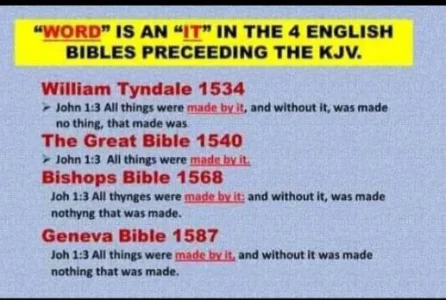
John 1:3 “Everything came to be through it.” The logos is an “it” not a “him.”

Translators have deliberately chosen to use “him” because they wanted to emphasize that the Word was the male person we know as Jesus. This was a theological choice, not a linguistic one.

"Do not forsake wisdom, and she will protect you; love her, and she will watch over you” (Proverbs 4:6).

Is the Wisdom in Proverbs 4:6 a distinct divine person?

The "Word" is not literally a person for the same reason that "Wisdom" is not literally a person. Both are to be taken metaphorically.

Jesus is the personification of the Word because He speaks the words of God. To listen to Jesus equals listening to the Word of God.
For those interested, I have shared that logos is used as in metonymy ( a figure of speech related to analogy). Basically that means that the characteristics of logos used in other contexts have now been used to identify One who exists with God and is God. Before sharing that One who came incarnate as Jesus, this unnamed One had been active in the creation of the world.

The metonymic use essentially takes the apologetic sense of logos developed by Philo in his incorporation of Proverbs 8 (with the participation of Wisdom in creation) and identified that creative role with One who participated along with God. John 1 then takes that unnamed One and shows that he took on flesh with whom we know as Jesus. This then is the pre-existent One who came in the flesh. This concept of logos also shows Jesus as the logos of Greek philosophy. Thus the text would appeal to anyone whether Jewish or Greek so they could know who Jesus is.

Therefore Jesus is a "he" not an "it," contrary to what the unitarians believe.
Some discussion of this also appears in #the-apostle-concept-of-logos

Praise God who used a Jewish apologist to connect a Greek philosophical concept of logos with the God of Israel. This happened in the proper moment of time to further identify the logos as the pre-existent One who came as Jesus. Jews would then have Philo's ideas shared among them as John's gospel was distributed.

The unitarian fails to understand the context and culture under which John 1 was written.
 
Last edited:
There is something here however

We have one who is coming with clouds, one to whom is glory and dominion. He had been pierced

Revelation 1:6–8 (NASB 95) — 6 and He has made us to be a kingdom, priests to His God and Father—to Him be the glory and the dominion forever and ever. Amen. 7 BEHOLD, HE IS COMING WITH THE CLOUDS, and every eye will see Him, even those who pierced Him; and all the tribes of the earth will mourn over Him. So it is to be. Amen. 8 “I am the Alpha and the Omega,” says the Lord God, “who is and who was and who is to come, the Almighty.”
with

He who is to come is the Lord God, the almighty

Rev 22:12-13

12 "Behold, I Am coming quickly, and My reward is with Me, to render to every man according to what he has done. 13 "I Am the Alpha and the Omega, the first and the last, the beginning and the end."

Rev 22:16,20

16 "I, Jesus, have sent My angel to testify to you these things for the churches. I am the root and the descendant of David, the bright morning star."

20 He who testifies to these things says, "Yes, I Am coming quickly." Amen. Come, Lord Jesus.


The immediate text clearly tells us that it was Jesus who was pierced and who is Coming in the clouds. This person coming in the clouds is God, the almighty that is Lord Jesus.
The book of Revelation does not teach that Jesus is God or even deal with Christianity. It's a book written in parables and figures of speech based on the customs and culture of Israel that deal with what will concern Israel in the future. The words “I am the Alpha and the Omega,’ says the Lord God” are not a teaching on the trinity or that we should believe or confess that Jesus is God. These words apply to God, not to Christ. The one “who is and who was and who is to come” is clearly identified in the context as God, not Jesus Christ. Revelation 1:4-5 reads: “Grace and peace to you from him who is, and who was, and who is to come, and from the seven spirits before his throne, and from Jesus Christ, who is the faithful witness, the firstborn from the dead, and the ruler of the kings of the earth.” The separation between “the one who is, was and is to come” and Jesus Christ can be clearly seen. The one “who is, and who was and who is to come” is God.

The phrase “the Alpha and the Omega” has caused many people to believe this verse refers to Christ. However, study of the occurrences of the phrase indicates that the title “Alpha and Omega” applies solely to God. Scholars are not completely sure what the phrase “the Alpha and the Omega” means. Lenski concludes “it is fruitless to search Jewish and pagan literature for the source of something that resembles this name Alpha and Omega. Nowhere is a person, to say nothing of a divine Person, called "Alpha and Omega" or in Hebrew, Aleph and Tau.

Although there is no evidence from the historical sources that anyone is named “the Alpha and Omega” Bullinger says that the phrase “is a Hebraism, in common use among the ancient Jewish Commentators to designate the whole of anything from the beginning to the end." That would make the expression the figure of speech polarmerismos, similar to "and there was evening, and there was morning” which stands for the whole day in Genesis 1. The best scholarly minds have concluded that the phrase has something to do with starting and finishing something, or the entirety of something. Norton writes that these words “denote the certain accomplishment of his purposes; that what he has begun he will carry on to its consummation.

The trinitarian has only 3 to pick from...

1.) Use a verse from a bad translation.
2.) Use a verse that is taken out of context.
3.) Not understand how the words were used in the culture they were written in.

And basically that's all trinitarians have. And I mean 100 percent of what they have. They have nothing else.
 
The book of Revelation does not teach that Jesus is God or even deal with Christianity. It's a book written in parables and figures of speech based on the customs and culture of Israel that deal with what will concern Israel in the future. The words “I am the Alpha and the Omega,’ says the Lord God” are not a teaching on the trinity or that we should believe or confess that Jesus is God. These words apply to God, not to Christ. The one “who is and who was and who is to come” is clearly identified in the context as God, not Jesus Christ. Revelation 1:4-5 reads: “Grace and peace to you from him who is, and who was, and who is to come, and from the seven spirits before his throne, and from Jesus Christ, who is the faithful witness, the firstborn from the dead, and the ruler of the kings of the earth.” The separation between “the one who is, was and is to come” and Jesus Christ can be clearly seen. The one “who is, and who was and who is to come” is God.

The phrase “the Alpha and the Omega” has caused many people to believe this verse refers to Christ. However, study of the occurrences of the phrase indicates that the title “Alpha and Omega” applies solely to God. Scholars are not completely sure what the phrase “the Alpha and the Omega” means. Lenski concludes “it is fruitless to search Jewish and pagan literature for the source of something that resembles this name Alpha and Omega. Nowhere is a person, to say nothing of a divine Person, called "Alpha and Omega" or in Hebrew, Aleph and Tau.

Although there is no evidence from the historical sources that anyone is named “the Alpha and Omega” Bullinger says that the phrase “is a Hebraism, in common use among the ancient Jewish Commentators to designate the whole of anything from the beginning to the end." That would make the expression the figure of speech polarmerismos, similar to "and there was evening, and there was morning” which stands for the whole day in Genesis 1. The best scholarly minds have concluded that the phrase has something to do with starting and finishing something, or the entirety of something. Norton writes that these words “denote the certain accomplishment of his purposes; that what he has begun he will carry on to its consummation.

The trinitarian has only 3 to pick from...

1.) Use a verse from a bad translation.
2.) Use a verse that is taken out of context.
3.) Not understand how the words were used in the culture they were written in.

And basically that's all trinitarians have. And I mean 100 percent of what they have. They have nothing else.
So in confusion, it is suggested that all that is shown in the scripture of the pre-existence and divinity of Christ must always be a mistranslation or taken out of context.
I have just shown how logos in John 1 was extending the cultural perception of the logos contemporary to Jewish culture in the first century. We'll see how the unitarian responds to that as some error of perception of Jewish culture. Of course the other element of Jewish culture wsa the recognition of Two Powers in Heaven as addressed by Alan Segal -- of such encounters as Gen 15:1-10. Somehow, I do not feel that the unitarians are aware of the Jewish culture as much as they believe of themselves.
 
That is a new one. That God cannot lie, and so He cannot say that Jesus is not God.

John 1:3 “Everything came to be through it.” The logos is an “it” not a “him.”
John 1:3 (NASB95) — 3 All things came into being through Him, and apart from Him nothing came into being that has come into being.

John 1:3 (NA27) — 3 πάντα διʼ αὐτοῦ ἐγένετο, καὶ χωρὶς αὐτοῦ ἐγένετο οὐδὲ ἕν. ὃ γέγονεν

αυτος autos he
RP3GSM pronoun, personal, third person, genitive, singular, masculine
LN 92.11 Louw-Nida


Translators have deliberately chosen to use “him” because they wanted to emphasize that the Word was the male person we know as Jesus. This was a theological choice, not a linguistic one.

Again

John 1:3 (NA27) — 3 πάντα διʼ αὐτοῦ ἐγένετο, καὶ χωρὶς αὐτοῦ ἐγένετο οὐδὲ ἕν. ὃ γέγονεν

αυτος autos he
RP3GSM pronoun, personal, third person, genitive, singular, masculine
LN 92.11 Louw-Nida

Scripture continues

John 1:3–5 (NASB 95) — 3 All things came into being through Him, and apart from Him nothing came into being that has come into being. 4 In Him was life, and the life was the Light of men. 5 The Light shines in the darkness, and the darkness did not comprehend it.

6 There came a man sent from God, whose name was John. 7 He came as a witness, to testify about the Light, so that all might believe through him. 8 He was not the Light, but he came to testify about the Light. 9 There was the true Light which, coming into the world, enlightens every man. 10 He was in the world, and the world was made through Him, and the world did not know Him. 11 He came to His own, and those who were His own did not receive Him. 12 But as many as received Him, to them He gave the right to become children of God, even to those who believe in His name, 13 who were born, not of blood nor of the will of the flesh nor of the will of man, but of God. 14 And the Word became flesh, and dwelt among us, and we saw His glory, glory as of the only begotten from the Father, full of grace and truth. 15 John testified about Him and cried out, saying, “This was He of whom I said, ‘He who comes after me has a higher rank than I, for He existed before me.’ ” 16 For of His fullness we have all received, and grace upon grace. 17 For the Law was given through Moses; grace and truth were realized through Jesus Christ.
 
The book of Revelation does not teach that Jesus is God or even deal with Christianity. It's a book written in parables and figures of speech based on the customs and culture of Israel that deal with what will concern Israel in the future. The words “I am the Alpha and the Omega,’ says the Lord God” are not a teaching on the trinity or that we should believe or confess that Jesus is God. These words apply to God, not to Christ. The one “who is and who was and who is to come” is clearly identified in the context as God, not Jesus Christ.
We have one who is coming with clouds, one to whom is glory and dominion. He had been pierced.

Hello, Jesus, not the Father, had been pierced.

Revelation 1:6–8 (NASB 95) — 6 and He has made us to be a kingdom, priests to His God and Father—to Him be the glory and the dominion forever and ever. Amen. 7 BEHOLD, HE IS COMING WITH THE CLOUDS, and every eye will see Him, even those who pierced Him; and all the tribes of the earth will mourn over Him. So it is to be. Amen. 8 “I am the Alpha and the Omega,” says the Lord God, “who is and who was and who is to come, the Almighty.”
with

He who is to come is the Lord God, the almighty

Revelation 22:12–16 (NASB 95) — 12 “Behold, I am coming quickly, and My reward is with Me, to render to every man according to what he has done. 13 I am the Alpha and the Omega, the first and the last, the beginning and the end.” 14 Blessed are those who wash their robes, so that they may have the right to the tree of life, and may enter by the gates into the city. 15 Outside are the dogs and the sorcerers and the immoral persons and the murderers and the idolaters, and everyone who loves and practices lying. 16 “I, Jesus, have sent My angel to testify to you these things for the churches. I am the root and the descendant of David, the bright morning star.”

20 He who testifies to these things says, "Yes, I Am coming quickly." Amen. Come, Lord Jesus.

The coming one is the Lord Jesus.

The one pierced is Jesus Christ.

He is the Alpha and Omega, the first and the last, the beginning and the end

So he is the coming one, God, the almighty.
 
That is a new one. That God cannot lie, and so He cannot say that Jesus is not God.

John 1:3 “Everything came to be through it.” The logos is an “it” not a “him.”
From the perspective of the seeing the Logos before the incarnation, you are correct. But in verse 14 we are told the the Logos became a man. That makes the Logos, from this side of the incarnation, a He: still God (also a He), but now a man also.
Translators have deliberately chosen to use “him” because they wanted to emphasize that the Word was the male person we know as Jesus. This was a theological choice, not a linguistic one.
It is a translation choice based on the context. As noted above, God is a "He", and the Logos is God (therefore a "He" also), and "It" became a man (took on flesh), so again it is a "He".
"Do not forsake wisdom, and she will protect you; love her, and she will watch over you” (Proverbs 4:6).

Is the Wisdom in Proverbs 4:6 a distinct divine person?
No. It is not. But then again, Scripture never says that wisdom took on flesh and became a man (or woman), nor is wisdom said to be God.
The "Word" is not literally a person for the same reason that "Wisdom" is not literally a person. Both are to be taken metaphorically.

Jesus is the personification of the Word because He speaks the words of God. To listen to Jesus equals listening to the Word of God.
Here is where you go off the reservation. Jesus not only speaks the Word of God, He is the Logos of God in human form. The Logos of God, which was both with God and was God (fully equal with the Father), left Heaven; emptied Itself/Himself of the glory, independent use of His power, and knowledge; and became a man (Jesus). That is precisely what the Scriptures say about Him. But Scripture does not say anything like that about wisdom. It is personified in metaphorical terms in Prov 4:6, but it is not called God, nor is it said to have taken on flesh and become a human. There is NO relativity between the two.
 
That is a new one. That God cannot lie, and so He cannot say that Jesus is not God.

John 1:3 “Everything came to be through it.” The logos is an “it” not a “him.”
This is nothing more than a desparate attempt to deny Christ as the creator

John 1:1–3In the beginning was the Word, and the Word was with God, and the Word was God. He was in the beginning with God. All things came into being through Him, and apart from Him nothing came into being that has come into being.
Heb 1:2in these last days has spoken to us in His Son, whom He appointed heir of all things, through whom also He made the world.
John 1:10He was in the world, and the world was made through Him, and the world did not know Him.
1 Cor 8:6yet for us there is but one God, the Father, from whom are all things and we exist for Him; and one Lord, Jesus Christ, by whom are all things, and we exist through Him.
Heb 1:10And, “You, Lord, in the beginning laid the foundation of the earth, And the heavens are the works of Your hands;
Col 1:15–17He is the image of the invisible God, the firstborn of all creation. For by Him all things were created, both in the heavens and on earth, visible and invisible, whether thrones or dominions or rulers or authorities—all things have been created through Him and for Him. He is before all things, and in Him all things hold together.
 
This is nothing more than a desparate attempt to deny Christ as the creator

John 1:1–3In the beginning was the Word, and the Word was with God, and the Word was God. He was in the beginning with God. All things came into being through Him, and apart from Him nothing came into being that has come into being.
Heb 1:2in these last days has spoken to us in His Son, whom He appointed heir of all things, through whom also He made the world.
John 1:10He was in the world, and the world was made through Him, and the world did not know Him.
1 Cor 8:6yet for us there is but one God, the Father, from whom are all things and we exist for Him; and one Lord, Jesus Christ, by whom are all things, and we exist through Him.
Heb 1:10And, “You, Lord, in the beginning laid the foundation of the earth, And the heavens are the works of Your hands;
Col 1:15–17He is the image of the invisible God, the firstborn of all creation. For by Him all things were created, both in the heavens and on earth, visible and invisible, whether thrones or dominions or rulers or authorities—all things have been created through Him and for Him. He is before all things, and in Him all things hold together.
that desperation is why i have spoken of the one-verse hyperliteralist unitarian (i.e. John 17:3). After they see that verse, they interpret all of scripture to their perception of that one verse.
 
This is nothing more than a desparate attempt to deny Christ as the creator

John 1:1–3In the beginning was the Word, and the Word was with God, and the Word was God. He was in the beginning with God. All things came into being through Him, and apart from Him nothing came into being that has come into being.
Heb 1:2in these last days has spoken to us in His Son, whom He appointed heir of all things, through whom also He made the world.
John 1:10He was in the world, and the world was made through Him, and the world did not know Him.
1 Cor 8:6yet for us there is but one God, the Father, from whom are all things and we exist for Him; and one Lord, Jesus Christ, by whom are all things, and we exist through Him.
Heb 1:10And, “You, Lord, in the beginning laid the foundation of the earth, And the heavens are the works of Your hands;
Col 1:15–17He is the image of the invisible God, the firstborn of all creation. For by Him all things were created, both in the heavens and on earth, visible and invisible, whether thrones or dominions or rulers or authorities—all things have been created through Him and for Him. He is before all things, and in Him all things hold together.
Colossians 1:16 is not a teaching on the trinity or that we should believe or confess that Jesus is God. Many point to Colosians 1:16 and claim it proves that Jesus is the creator of the universe. Isaiah 44:24 says God created "all alone" and "by myself." So who's telling the truth? Acts 17:24-31 says God made the world and everything in it. He will judge the world by a MAN whom He has appointed and raised from the dead.

So what does Colossians 1:16 mean? The phrase "all things were created in" and "through" and "for" Jesus is not about physical creation. It's about God's plan of redemption, which centered on the Messiah. Jesus is the foundation of God's plan, and not the architect of the cosmos. Colosians 1 isn't about Genesis 1. It's about the New Creation.

It tells you right in the verse what the all things are. They are thrones, dominions, principalities, and powers. Not planets, oceans and stars. The verse is telling us Jesus will need these things to govern in his new up-coming kingdom.

The trinitarian has only 3 to pick from...

1.) Use a verse from a bad translation.
2.) Use a verse that is taken out of context.
3.) Not understand how the words were used in the culture they were written in.

And basically that's all trinitarians have. And I mean 100 percent of what they have. They have nothing else.
 
From the perspective of the seeing the Logos before the incarnation, you are correct. But in verse 14 we are told the the Logos became a man. That makes the Logos, from this side of the incarnation, a He: still God (also a He), but now a man also.

It is a translation choice based on the context. As noted above, God is a "He", and the Logos is God (therefore a "He" also), and "It" became a man (took on flesh), so again it is a "He".

No. It is not. But then again, Scripture never says that wisdom took on flesh and became a man (or woman), nor is wisdom said to be God.

Here is where you go off the reservation. Jesus not only speaks the Word of God, He is the Logos of God in human form. The Logos of God, which was both with God and was God (fully equal with the Father), left Heaven; emptied Itself/Himself of the glory, independent use of His power, and knowledge; and became a man (Jesus). That is precisely what the Scriptures say about Him. But Scripture does not say anything like that about wisdom. It is personified in metaphorical terms in Prov 4:6, but it is not called God, nor is it said to have taken on flesh and become a human. There is NO relativity between the two.
John 1:14 is not a teaching on the trinity or that we should believe or confess that Jesus is God. The "Word" is the wisdom, plan or purpose of God and the Word became flesh as Jesus Christ. Thus, Jesus Christ was the Word in the flesh, which is shortened to the Word for ease of speaking. Scripture is also the Word in writing. Everyone agrees that the Word in writing had a beginning. So did the Word in the flesh. In fact, the Greek text of Matthew 1:18 says that very clearly: "Now the beginning of Jesus Christ was in this manner..." The modern Greek texts all read "beginning" in Matthew 1:18. Birth is considered an acceptable translation since the beginning of some things is birth, and so most translations read birth. Nevertheless, the proper understanding of Matthew 1:18 is the beginning of Jesus Christ. In the beginning God had a plan, a purpose, which became flesh when Jesus was conceived.

The trinitarian has only 3 to pick from...

1.) Use a verse from a bad translation.
2.) Use a verse that is taken out of context.
3.) Not understand how the words were used in the culture they were written in.

And basically that's all trinitarians have. And I mean 100 percent of what they have. They have nothing else.
 
We have one who is coming with clouds, one to whom is glory and dominion. He had been pierced.

Hello, Jesus, not the Father, had been pierced.

Revelation 1:6–8 (NASB 95) — 6 and He has made us to be a kingdom, priests to His God and Father—to Him be the glory and the dominion forever and ever. Amen. 7 BEHOLD, HE IS COMING WITH THE CLOUDS, and every eye will see Him, even those who pierced Him; and all the tribes of the earth will mourn over Him. So it is to be. Amen. 8 “I am the Alpha and the Omega,” says the Lord God, “who is and who was and who is to come, the Almighty.”
with

He who is to come is the Lord God, the almighty

Revelation 22:12–16 (NASB 95) — 12 “Behold, I am coming quickly, and My reward is with Me, to render to every man according to what he has done. 13 I am the Alpha and the Omega, the first and the last, the beginning and the end.” 14 Blessed are those who wash their robes, so that they may have the right to the tree of life, and may enter by the gates into the city. 15 Outside are the dogs and the sorcerers and the immoral persons and the murderers and the idolaters, and everyone who loves and practices lying. 16 “I, Jesus, have sent My angel to testify to you these things for the churches. I am the root and the descendant of David, the bright morning star.”

20 He who testifies to these things says, "Yes, I Am coming quickly." Amen. Come, Lord Jesus.

The coming one is the Lord Jesus.

The one pierced is Jesus Christ.

He is the Alpha and Omega, the first and the last, the beginning and the end

So he is the coming one, God, the almighty.
The book of Revelation does not teach that Jesus is God or even deal with Christianity. It's a book written in parables and figures of speech based on the customs and culture of Israel that deal with what will concern Israel in the future. The words “I am the Alpha and the Omega,’ says the Lord God” are not a teaching on the trinity or that we should believe or confess that Jesus is God. These words apply to God, not to Christ. The one “who is and who was and who is to come” is clearly identified in the context as God, not Jesus Christ. Revelation 1:4-5 reads: “Grace and peace to you from him who is, and who was, and who is to come, and from the seven spirits before his throne, and from Jesus Christ, who is the faithful witness, the firstborn from the dead, and the ruler of the kings of the earth.” The separation between “the one who is, was and is to come” and Jesus Christ can be clearly seen. The one “who is, and who was and who is to come” is God.

The phrase “the Alpha and the Omega” has caused many people to believe this verse refers to Christ. However, study of the occurrences of the phrase indicates that the title “Alpha and Omega” applies solely to God. Scholars are not completely sure what the phrase “the Alpha and the Omega” means. Lenski concludes “it is fruitless to search Jewish and pagan literature for the source of something that resembles this name Alpha and Omega. Nowhere is a person, to say nothing of a divine Person, called "Alpha and Omega" or in Hebrew, Aleph and Tau.

Although there is no evidence from the historical sources that anyone is named “the Alpha and Omega” Bullinger says that the phrase “is a Hebraism, in common use among the ancient Jewish Commentators to designate the whole of anything from the beginning to the end." That would make the expression the figure of speech polarmerismos, similar to "and there was evening, and there was morning” which stands for the whole day in Genesis 1. The best scholarly minds have concluded that the phrase has something to do with starting and finishing something, or the entirety of something. Norton writes that these words “denote the certain accomplishment of his purposes; that what he has begun he will carry on to its consummation.
 
John 1:3 (NASB95) — 3 All things came into being through Him, and apart from Him nothing came into being that has come into being.

John 1:3 (NA27) — 3 πάντα διʼ αὐτοῦ ἐγένετο, καὶ χωρὶς αὐτοῦ ἐγένετο οὐδὲ ἕν. ὃ γέγονεν

αυτος autos he
RP3GSM pronoun, personal, third person, genitive, singular, masculine
LN 92.11 Louw-Nida


Again

John 1:3 (NA27) — 3 πάντα διʼ αὐτοῦ ἐγένετο, καὶ χωρὶς αὐτοῦ ἐγένετο οὐδὲ ἕν. ὃ γέγονεν

αυτος autos he
RP3GSM pronoun, personal, third person, genitive, singular, masculine
LN 92.11 Louw-Nida

Scripture continues

John 1:3–5 (NASB 95) — 3 All things came into being through Him, and apart from Him nothing came into being that has come into being. 4 In Him was life, and the life was the Light of men. 5 The Light shines in the darkness, and the darkness did not comprehend it.

6 There came a man sent from God, whose name was John. 7 He came as a witness, to testify about the Light, so that all might believe through him. 8 He was not the Light, but he came to testify about the Light. 9 There was the true Light which, coming into the world, enlightens every man. 10 He was in the world, and the world was made through Him, and the world did not know Him. 11 He came to His own, and those who were His own did not receive Him. 12 But as many as received Him, to them He gave the right to become children of God, even to those who believe in His name, 13 who were born, not of blood nor of the will of the flesh nor of the will of man, but of God. 14 And the Word became flesh, and dwelt among us, and we saw His glory, glory as of the only begotten from the Father, full of grace and truth. 15 John testified about Him and cried out, saying, “This was He of whom I said, ‘He who comes after me has a higher rank than I, for He existed before me.’ ” 16 For of His fullness we have all received, and grace upon grace. 17 For the Law was given through Moses; grace and truth were realized through Jesus Christ.
People often say I'm wrong when I post this because they say I looked it up in an Interlinear or Concordance and it shows the word is a "him" and not an "it." Those reference books show how the Bible translates a word and not what the Greek actually means. The pronoun is an "it" when it refers to an inanimate noun like the "Word" because Greek has grammatical gender and the "Word" in John 1 is a thing so the Greek says it's an "it."
 
People often say I'm wrong when I post this because they say I looked it up in an Interlinear or Concordance and it shows the word is a "him" and not an "it." Those reference books show how the Bible translates a word and not what the Greek actually means. The pronoun is an "it" when it refers to an inanimate noun like the "Word" because Greek has grammatical gender and the "Word" in John 1 is a thing so the Greek says it's an "it."
Sorry but the Greek pronoun is masculine, not neuter.

The Greek and the text are contrary to the neuter

John 1:3 (NASB95) — 3 All things came into being through Him, and apart from Him nothing came into being that has come into being.

John 1:3 (NA27) — 3 πάντα διʼ αὐτοῦ ἐγένετο, καὶ χωρὶς αὐτοῦ ἐγένετο οὐδὲ ἕν. ὃ γέγονεν

αυτος autos he
RP3GSM pronoun, personal, third person, genitive, singular, masculine
LN 92.11 Louw-Nida

Again

John 1:3 (NA27) — 3 πάντα διʼ αὐτοῦ ἐγένετο, καὶ χωρὶς αὐτοῦ ἐγένετο οὐδὲ ἕν. ὃ γέγονεν

αυτος autos he
RP3GSM pronoun, personal, third person, genitive, singular, masculine
LN 92.11 Louw-Nida

Scripture continues

John 1:3–5 (NASB 95) — 3 All things came into being through Him, and apart from Him nothing came into being that has come into being. 4 In Him was life, and the life was the Light of men. 5 The Light shines in the darkness, and the darkness did not comprehend it.

6 There came a man sent from God, whose name was John. 7 He came as a witness, to testify about the Light, so that all might believe through him. 8 He was not the Light, but he came to testify about the Light. 9 There was the true Light which, coming into the world, enlightens every man. 10 He was in the world, and the world was made through Him, and the world did not know Him. 11 He came to His own, and those who were His own did not receive Him. 12 But as many as received Him, to them He gave the right to become children of God, even to those who believe in His name, 13 who were born, not of blood nor of the will of the flesh nor of the will of man, but of God. 14 And the Word became flesh, and dwelt among us, and we saw His glory, glory as of the only begotten from the Father, full of grace and truth. 15 John testified about Him and cried out, saying, “This was He of whom I said, ‘He who comes after me has a higher rank than I, for He existed before me.’ ” 16 For of His fullness we have all received, and grace upon grace. 17 For the Law was given through Moses; grace and truth were realized through Jesus Christ.

It is filled with a masculine pronoun.
 
The book of Revelation does not teach that Jesus is God or even deal with Christianity. It's a book written in parables and figures of speech based on the customs and culture of Israel that deal with what will concern Israel in the future. The words “I am the Alpha and the Omega,’ says the Lord God” are not a teaching on the trinity or that we should believe or confess that Jesus is God. These words apply to God, not to Christ. The one “who is and who was and who is to come” is clearly identified in the context as God, not Jesus Christ. Revelation 1:4-5 reads: “Grace and peace to you from him who is, and who was, and who is to come, and from the seven spirits before his throne, and from Jesus Christ, who is the faithful witness, the firstborn from the dead, and the ruler of the kings of the earth.” The separation between “the one who is, was and is to come” and Jesus Christ can be clearly seen. The one “who is, and who was and who is to come” is God.

The phrase “the Alpha and the Omega” has caused many people to believe this verse refers to Christ. However, study of the occurrences of the phrase indicates that the title “Alpha and Omega” applies solely to God. Scholars are not completely sure what the phrase “the Alpha and the Omega” means. Lenski concludes “it is fruitless to search Jewish and pagan literature for the source of something that resembles this name Alpha and Omega. Nowhere is a person, to say nothing of a divine Person, called "Alpha and Omega" or in Hebrew, Aleph and Tau.

Although there is no evidence from the historical sources that anyone is named “the Alpha and Omega” Bullinger says that the phrase “is a Hebraism, in common use among the ancient Jewish Commentators to designate the whole of anything from the beginning to the end." That would make the expression the figure of speech polarmerismos, similar to "and there was evening, and there was morning” which stands for the whole day in Genesis 1. The best scholarly minds have concluded that the phrase has something to do with starting and finishing something, or the entirety of something. Norton writes that these words “denote the certain accomplishment of his purposes; that what he has begun he will carry on to its consummation.
Again you make a claim which does not address the fact

We have one who is coming with clouds, one to whom is glory and dominion. He had been pierced.

Hello, Jesus, not the Father, had been pierced.

Revelation 1:6–8 (NASB 95) — 6 and He has made us to be a kingdom, priests to His God and Father—to Him be the glory and the dominion forever and ever. Amen. 7 BEHOLD, HE IS COMING WITH THE CLOUDS, and every eye will see Him, even those who pierced Him; and all the tribes of the earth will mourn over Him. So it is to be. Amen. 8 “I am the Alpha and the Omega,” says the Lord God, “who is and who was and who is to come, the Almighty.”
with

He who is to come is the Lord God, the almighty

Revelation 22:12–16 (NASB 95) — 12 “Behold, I am coming quickly, and My reward is with Me, to render to every man according to what he has done. 13 I am the Alpha and the Omega, the first and the last, the beginning and the end.” 14 Blessed are those who wash their robes, so that they may have the right to the tree of life, and may enter by the gates into the city. 15 Outside are the dogs and the sorcerers and the immoral persons and the murderers and the idolaters, and everyone who loves and practices lying. 16 “I, Jesus, have sent My angel to testify to you these things for the churches. I am the root and the descendant of David, the bright morning star.”

20 He who testifies to these things says, "Yes, I Am coming quickly." Amen. Come, Lord Jesus.

The coming one is the Lord Jesus.

The one pierced is Jesus Christ.


He is the Alpha and Omega, the first and the last, the beginning and the end

So he is the coming one, God, the almighty.
 
Colossians 1:16 is not a teaching on the trinity or that we should believe or confess that Jesus is God. Many point to Colosians 1:16 and claim it proves that Jesus is the creator of the universe. Isaiah 44:24 says God created "all alone" and "by myself." So who's telling the truth? Acts 17:24-31 says God made the world and everything in it. He will judge the world by a MAN whom He has appointed and raised from the dead.

So what does Colossians 1:16 mean? The phrase "all things were created in" and "through" and "for" Jesus is not about physical creation. It's about God's plan of redemption, which centered on the Messiah. Jesus is the foundation of God's plan, and not the architect of the cosmos. Colosians 1 isn't about Genesis 1. It's about the New Creation.

It tells you right in the verse what the all things are. They are thrones, dominions, principalities, and powers. Not planets, oceans and stars. The verse is telling us Jesus will need these things to govern in his new up-coming kingdom.

The trinitarian has only 3 to pick from...

1.) Use a verse from a bad translation.
2.) Use a verse that is taken out of context.
3.) Not understand how the words were used in the culture they were written in.

And basically that's all trinitarians have. And I mean 100 percent of what they have. They have nothing else.
Try again the issue is creation

This is nothing more than a desparate attempt to deny Christ as the creator

John 1:1–3In the beginning was the Word, and the Word was with God, and the Word was God. He was in the beginning with God. All things came into being through Him, and apart from Him nothing came into being that has come into being.
The word who became flesh as Jesus Christ is he through whom all things came into being. He through whom nothing came into being apart from

Heb 1:2in these last days has spoken to us in His Son, whom He appointed heir of all things, through whom also He made the world.
The world was made by him

John 1:10He was in the world, and the world was made through Him, and the world did not know Him.

Again the world was made through him

1 Cor 8:6yet for us there is but one God, the Father, from whom are all things and we exist for Him; and one Lord, Jesus Christ, by whom are all things, and we exist through Him.
By the Lord Jesus are all things, indeed we exist through him
Heb 1:10And, “You, Lord, in the beginning laid the foundation of the earth, And the heavens are the works of Your hands;


The foundation of the earth was by the Lord Jesus as was the heavens

Now for the one verse you quote out of six

Col 1:15–17He is the image of the invisible God, the firstborn of all creation. For by Him all things were created, both in the heavens and on earth, visible and invisible, whether thrones or dominions or rulers or authorities—all things have been created through Him and for Him. He is before all things, and in Him all things hold together.
We find Jesus is the image of the invisible God, the firstborn of all creation
All things were made by him in heaven and earth
for which you say
The phrase "all things were created in" and "through" and "for" Jesus is not about physical creation. It's about God's plan of redemption, which centered on the Messiah. Jesus is the foundation of God's plan, and not the architect of the cosmos. Colosians 1 isn't about Genesis 1. It's about the New Creation.
Were your limited view true there still would be no denial Christ was the creator of all things both in heaven and earth

And from the verse we see Jesus is the image of the invisible God.


Colossians 1:15–20 (NASB 95) — 15 He is the image of the invisible God, the firstborn of all creation. 16 For by Him all things were created, both in the heavens and on earth, visible and invisible, whether thrones or dominions or rulers or authorities—all things have been created through Him and for Him. 17 He is before all things, and in Him all things hold together. 18 He is also head of the body, the church; and He is the beginning, the firstborn from the dead, so that He Himself will come to have first place in everything. 19 For it was the Father’s good pleasure for all the fullness to dwell in Him, 20 and through Him to reconcile all things to Himself, having made peace through the blood of His cross; through Him, I say, whether things on earth or things in heaven.

He in whom all the fullness dwells
 
Try again the issue is creation

This is nothing more than a desparate attempt to deny Christ as the creator

John 1:1–3In the beginning was the Word, and the Word was with God, and the Word was God. He was in the beginning with God. All things came into being through Him, and apart from Him nothing came into being that has come into being.
The word who became flesh as Jesus Christ is he through whom all things came into being. He through whom nothing came into being apart from

Heb 1:2in these last days has spoken to us in His Son, whom He appointed heir of all things, through whom also He made the world.
The world was made by him

John 1:10He was in the world, and the world was made through Him, and the world did not know Him.

Again the world was made through him

1 Cor 8:6yet for us there is but one God, the Father, from whom are all things and we exist for Him; and one Lord, Jesus Christ, by whom are all things, and we exist through Him.
By the Lord Jesus are all things, indeed we exist through him
Heb 1:10And, “You, Lord, in the beginning laid the foundation of the earth, And the heavens are the works of Your hands;


The foundation of the earth was by the Lord Jesus as was the heavens

Now for the one verse you quote out of six

Col 1:15–17He is the image of the invisible God, the firstborn of all creation. For by Him all things were created, both in the heavens and on earth, visible and invisible, whether thrones or dominions or rulers or authorities—all things have been created through Him and for Him. He is before all things, and in Him all things hold together.
We find Jesus is the image of the invisible God, the firstborn of all creation
All things were made by him in heaven and earth
for which you say
The phrase "all things were created in" and "through" and "for" Jesus is not about physical creation. It's about God's plan of redemption, which centered on the Messiah. Jesus is the foundation of God's plan, and not the architect of the cosmos. Colosians 1 isn't about Genesis 1. It's about the New Creation.
Were your limited view true there still would be no denial Christ was the creator of all things both in heaven and earth

And from the verse we see Jesus is the image of the invisible God.


Colossians 1:15–20 (NASB 95) — 15 He is the image of the invisible God, the firstborn of all creation. 16 For by Him all things were created, both in the heavens and on earth, visible and invisible, whether thrones or dominions or rulers or authorities—all things have been created through Him and for Him. 17 He is before all things, and in Him all things hold together. 18 He is also head of the body, the church; and He is the beginning, the firstborn from the dead, so that He Himself will come to have first place in everything. 19 For it was the Father’s good pleasure for all the fullness to dwell in Him, 20 and through Him to reconcile all things to Himself, having made peace through the blood of His cross; through Him, I say, whether things on earth or things in heaven.

He in whom all the fullness dwells
It seems difficult for people to understand that John 1:1 is introducing the Gospel of John, and not the Book of Genesis. The topic of John is God (the Father, the only God) at work in the ministry of the man Jesus of Nazareth, not the creation of rocks, trees and stars.
 
Again you make a claim which does not address the fact

We have one who is coming with clouds, one to whom is glory and dominion. He had been pierced.

Hello, Jesus, not the Father, had been pierced.

Revelation 1:6–8 (NASB 95) — 6 and He has made us to be a kingdom, priests to His God and Father—to Him be the glory and the dominion forever and ever. Amen. 7 BEHOLD, HE IS COMING WITH THE CLOUDS, and every eye will see Him, even those who pierced Him; and all the tribes of the earth will mourn over Him. So it is to be. Amen. 8 “I am the Alpha and the Omega,” says the Lord God, “who is and who was and who is to come, the Almighty.”
with

He who is to come is the Lord God, the almighty

Revelation 22:12–16 (NASB 95) — 12 “Behold, I am coming quickly, and My reward is with Me, to render to every man according to what he has done. 13 I am the Alpha and the Omega, the first and the last, the beginning and the end.” 14 Blessed are those who wash their robes, so that they may have the right to the tree of life, and may enter by the gates into the city. 15 Outside are the dogs and the sorcerers and the immoral persons and the murderers and the idolaters, and everyone who loves and practices lying. 16 “I, Jesus, have sent My angel to testify to you these things for the churches. I am the root and the descendant of David, the bright morning star.”

20 He who testifies to these things says, "Yes, I Am coming quickly." Amen. Come, Lord Jesus.

The coming one is the Lord Jesus.

The one pierced is Jesus Christ.


He is the Alpha and Omega, the first and the last, the beginning and the end

So he is the coming one, God, the almighty.
Again, I make a claim which does address the fact. And because you do not believe what I say. You then say I'm not responding to the subject.
 
Sorry but the Greek pronoun is masculine, not neuter.

The Greek and the text are contrary to the neuter

John 1:3 (NASB95) — 3 All things came into being through Him, and apart from Him nothing came into being that has come into being.

John 1:3 (NA27) — 3 πάντα διʼ αὐτοῦ ἐγένετο, καὶ χωρὶς αὐτοῦ ἐγένετο οὐδὲ ἕν. ὃ γέγονεν

αυτος autos he
RP3GSM pronoun, personal, third person, genitive, singular, masculine
LN 92.11 Louw-Nida

Again

John 1:3 (NA27) — 3 πάντα διʼ αὐτοῦ ἐγένετο, καὶ χωρὶς αὐτοῦ ἐγένετο οὐδὲ ἕν. ὃ γέγονεν

αυτος autos he
RP3GSM pronoun, personal, third person, genitive, singular, masculine
LN 92.11 Louw-Nida

Scripture continues

John 1:3–5 (NASB 95) — 3 All things came into being through Him, and apart from Him nothing came into being that has come into being. 4 In Him was life, and the life was the Light of men. 5 The Light shines in the darkness, and the darkness did not comprehend it.

6 There came a man sent from God, whose name was John. 7 He came as a witness, to testify about the Light, so that all might believe through him. 8 He was not the Light, but he came to testify about the Light. 9 There was the true Light which, coming into the world, enlightens every man. 10 He was in the world, and the world was made through Him, and the world did not know Him. 11 He came to His own, and those who were His own did not receive Him. 12 But as many as received Him, to them He gave the right to become children of God, even to those who believe in His name, 13 who were born, not of blood nor of the will of the flesh nor of the will of man, but of God. 14 And the Word became flesh, and dwelt among us, and we saw His glory, glory as of the only begotten from the Father, full of grace and truth. 15 John testified about Him and cried out, saying, “This was He of whom I said, ‘He who comes after me has a higher rank than I, for He existed before me.’ ” 16 For of His fullness we have all received, and grace upon grace. 17 For the Law was given through Moses; grace and truth were realized through Jesus Christ.

It is filled with a masculine pronoun.
1765335969137.webp
 
Tyndale used it” in John 1:3 because he chose the pronoun based on the English gender of the word worde rather than the masculine Greek gender of logos. In early 16th-century English, word was still treated as neuter (a holdover from Old English), so translators naturally used “it” for such nouns even when the original text used a masculine form. Thus, although logos is grammatically masculine in Greek, Tyndale’s English usage produced “it,” reflecting linguistic convention. Subsequent translations corrected this by emphasizing the masculine Greek gender.

The fact remains that the Word, who was God, tabernacled as Jesus on Earth. And because God cannot cease to be God, Jesus is God.
 
Back
Top Bottom