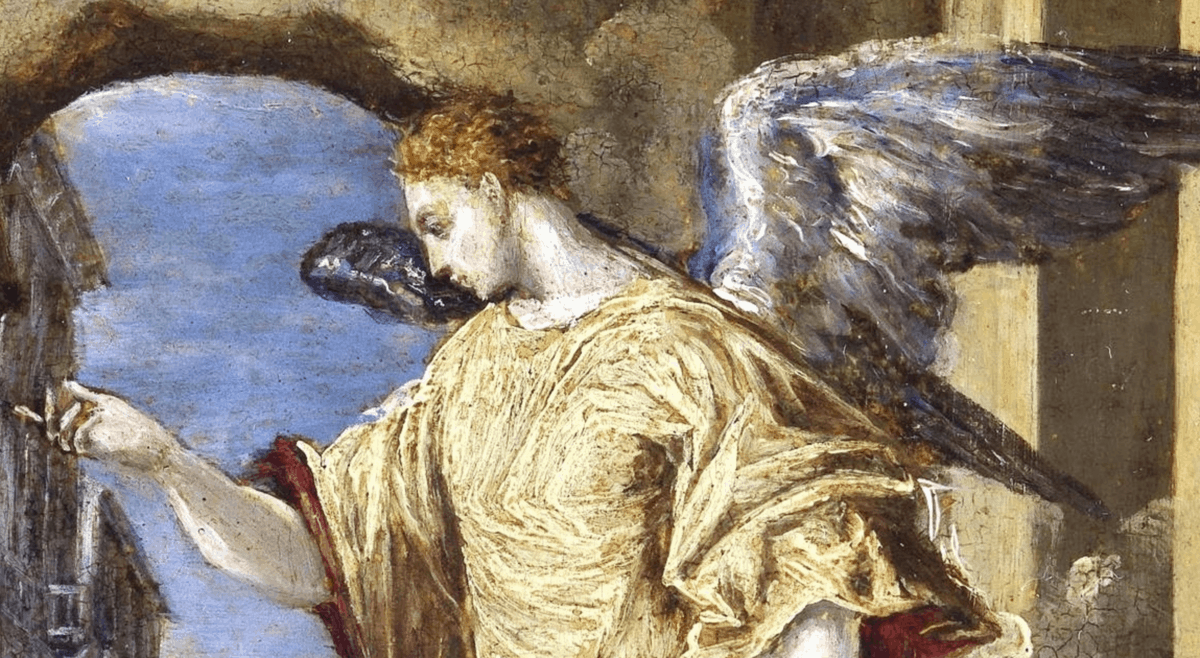
Who is the creator

Satan was a prince, never called archangel-Gabriel is a prince-never called archangel. There can only be 1 archangel-It means-Chief of the angels.
Yes Catholicism=2Thess 2:3 and all of her branches--God fixed it here in these last days=The JW,s. The teachings of Jesus in every translation on Earth prove its fact.
Show me where Gabriel is the rank of archangel; I don't know of any verse. Gabriel is a special messenger and stands in the presence of God. He brings God's answers to prayers, and also God's messages to certain people, like Mary and Joseph, and Daniel. But he's not a warrior like an archangel. In Daniel's case, he was bringing the answer but had to fight with the prince of Persia for 20 days. Then Daniel's prince, Michael, not Jesus, came to the rescue to help Gabriel, and the answer got delivered.

Satan was a cherub, though called the ruler of this world. Yes, some translations say prince, but not just one country, the whole world. But, Jesus, Himself, is called the Prince of Peace, but in the same verse called All Mighty God, as you said "named." By the way, what's the difference?

I know JW's believe their/your translation, NWT, is best. That may also be what makes you believe that Jesus and Michael are both created angels (I can't recall if you said "archangels). But you cannot get past the fact that the base of your translation is from the ancient corrupted codices from Alexandria. They too deleted words to force the Bible say what THEY wanted it to based on their own faulty beliefs. Don't you worry that the same evil spirit that caused such hubris is also why the NWT keeps getting updated to fit their own beliefs against the deity of Jesus?

As far as JW's believing "arch" is "chief" you would be correct in some ancient circles so not really your fault. But think of the St. Louis Arch. It is curved and hits the ground at both ends. It does not circle the globe. It has bounderies. In Michael's case, the boundary is over Israel. But, I can understand why you believe this as the definition you hold to is the same as in ancient manuscripts. Jesus, Himself, is called the Alpha and Omega, the Beginning and the End as if He had a beginning and an end. In reality He didn't. That is why He is our High Priest of the order of Melchizedek, having no father or mother, no beginning or end. He is the ever present God. That is also why in Hebrews 4, the Spirit of the Sabbath that used to be by the letter of the law one day a week (the 7th) is now "Today" meaning ever present. It is now abiding in Jesus and He in us 24/7/365, the Lord of the Sabbath.
 
Rev 6:1I watched as the Lamb opened the first of the seven seals. Then I heard one of the four living creatures say in a voice like thunder, “Come!” 2I looked, and there before me was a white horse! Its rider held a bow, and he was given a crown, and he rode out as a conqueror bent on conquest.

Where do you see Michael’s name?

Michael does battle in heaven against the dragon, but this unnamed rider is set to conquer on earth.

The white horse and crown are symbols of the supreme commander; can that be any other supreme than God?

Is not the Lamb the only one worthy to open the seals? Is not the Lamb the supreme commander of God’s army. Does he not also ride a white horse? (Rev 19:11-ff)

There is no biblical justification to say the rider is Michael.

Doug
The four horsemen of Rev. 6 follows Matthew 24 in order. This first white horse at the beginning of the Great Tribulation is a copycat going out to conquer on earth. It is not Christ, but Antichrist! Think about it. He couldn't fool anyone if he came on a black horse. You can't counterfeit a three dollar bill. Jesus does come back on a white horse in Rev. 19, but it is the real horse. And the angels that return with him are also riding white horses. The Antichrist receives a crown, but from the people who are deceived, not God.

4 And Jesus answered and said to them: “Take heed that no one deceives you. 5 For many will come in My name, saying, ‘I am the Christ,’ and will deceive many. 6 And you will hear of wars and rumors of wars. See that you are not troubled; for all these things must come to pass, but the end is not yet. 7 For nation will rise against nation, and kingdom against kingdom. And there will be famines, pestilences, and earthquakes in various places. 8 All these are the beginning of sorrows. 9 “Then they will deliver you up to tribulation and kill you, and you will be hated by all nations for My name’s sake.

Those are the four horsemen of Rev. 6

Of course, Michael the Archangel wars with Satan in Revelation 12 where "the woman" in verse one is Israel who gave birth to Jesus. Jesus gave birth to the Church, not the other way around. Some denominations think the woman is the Church. Do Weslyans? I don't know which ones, I've just seen that said.
 
NONE who has a God gets worship. The darkness teaches that lie. A mistranslated Greek word that has 5 different meanings. One of those meanings= obeisance to a king. That is what Jesus gets in reality. Catholicism put worship-Jesus was NEVER with Catholicism, they twisted it into oblivion. NONE of her branches fixed much.
God the Father calls the Son God in Hebrews
 
Satan was a prince, never called archangel-Gabriel is a prince-never called archangel. There can only be 1 archangel-It means-Chief of the angels.
Yes Catholicism=2Thess 2:3 and all of her branches--God fixed it here in these last days=The JW,s. The teachings of Jesus in every translation on Earth prove its fact.
JW teaches and holds to heresy of Arianism
 
Show me where Gabriel is the rank of archangel; I don't know of any verse. Gabriel is a special messenger and stands in the presence of God.
Though most discount the validity of this....

The Book of Enoch names seven archangels: Uriel, Raphael, Raguel, Michael, Saraqael, Gabriel, and Remiel.


The Ancient History of the 7 Archangels of the Bible​


Print
Sudan, Khartoum State, Khartoum, archangel michael from petros cathedral, faras, in the national mus

The Archangel Michael, in the Petros Cathedral in Khartoum, Sudan.
Eric Lafforgue/Art in All of Us/Getty Images
Angels and Miracles
Angels and Miracles
By
N.S. Gill
Updated on July 20, 2024
The Seven Archangels—also known as the Watchers because they tend to humanity—are mythical beings found in the Abrahamic religion underlying Judaism, Christianity, and Islam.

According to the "De Coelesti Hierarchia of Pseudo-Dionysius" written in the fourth to fifth century C.E., there was a nine-level hierarchy of the heavenly host: angels, archangels, principalities, powers, virtues, dominions, thrones, cherubim, and seraphim. The angels were the lowest of these, but the archangels were just above them.12

Seven Archangels of Biblical History​

  • There are seven archangels in the ancient history of the Judeo-Christian bible.
  • They are known as the Watchers because they take care of humans.
  • Michael and Gabriel are the only two named in the canonical Bible. The others were removed in the fourth century when the books of the Bible were configured at the Council of Rome.
  • The main legend concerning the archangels is known as the "Myth of the Fallen Angels."

Background on Archangels​

There are only two Archangels named in the canonical bible used by Catholics and Protestants alike, as well as in the Quran: Michael and Gabriel. But, originally there were seven discussed in the apocryphal Qumran text called "The Book of Enoch." The other five have various names but are most often called Raphael, Urial, Raguel, Zerachiel, and Remiel.

The archangels are part of the "Myth of the Fallen Angels," an ancient story far older than the New Testament of Christ, even though Enoch is thought to have been first collected about 300 B.C.E. The stories originate from the Bronze Age First Temple period in the 10th century B.C.E. when King Solomon's temple was built in Jerusalem. Similar tales are found in ancient Greek, Hurrian, and Hellenistic Egypt. The names of the angels are borrowed from the Babylonian civilization of Mesopotamia.3

Fallen Angels and the Origins of Evil​

In contrast to the Jewish myth about Adam, the myth of the fallen angels suggests that the humans in the Garden of Eden were not (entirely) responsible for the presence of evil on earth; fallen angels, also known as the Nephilim, were. The fallen angels, including Semihazah and Asael, came to earth, took human wives, and had children who turned out to be violent giants. Worst of all, they taught Enoch's family heaven's secrets, particularly precious metals and metallurgy.

The resulting bloodshed, says the Fallen Angel tale, caused an outcry from the earth loud enough to reach the gates of heaven, which the archangels reported to God. Enoch went to heaven in a fiery chariot to intercede, but he was blocked by the heavenly hosts. Eventually, Enoch was transformed into an angel ("The Metatron") for his efforts.


God then commissioned the archangels to intervene, by warning Adam's descendant Noah, imprisoning the guilty angels, destroying their offspring, and purifying the earth which the angels had polluted.

Anthropologists note that the Cain (the farmer) and Abel (the shepherd) story could reflect societal anxieties arising from competing food technologies, so the fallen angels' myth might reflect those between farmers and metallurgists.


Rejection of the Mythologies​

By the Second Temple period, this myth was transformed, and some religious scholars like David Suter believe it is the underlying myth for endogamy rules—who a high priest is allowed to marry—in the Jewish temple. Religious leaders are warned by this story that they should not marry outside the circle of the priesthood and certain families of the lay community, lest the priest run the danger of profaning his seed or the family line.3


What's Left: The Book of Revelation​

However, for the Catholic church, as well as the Protestant version of the Bible, a fragment of the story is left: the battle between the single fallen angel Lucifer and the archangel Michael. That battle is found in the book of Revelation, but the battle takes place in heaven, not on earth. Although Lucifer battles a host of angels, only Michael is named among them. The rest of the story was removed from the canonical bible by Pope Damasus I (366–384 C.E.) and the Council of Rome (382 C.E.).

Now war arose in heaven, Michael and his angels fighting against the dragon; and the dragon and his angels fought, but they were defeated and there was no longer any place for them in heaven. And the great dragon was thrown down, that ancient serpent, who is called the Devil and Satan, the deceiver of the whole world—he was thrown down to the earth, and his angels were thrown down with him. (Revelation 12:7–9)

Michael​

Mosaic on the facade, Serbian Orthodox church Saint Spyridon Church, Piazza Sant Antonio, Trieste, Friuli-Venezia Giulia, Italy

The Archangel Michael, Portrayed on the Facade of the Serbian Orthodox Serbian Orthodox Saint Spyridon Church in Italy. Wilfried Wirth / Getty Images
The Archangel Michael is the first and most important of the archangels. His name means "Who is like God?" which is a reference to the battle between the fallen angels and the archangels. Lucifer (also known as Satan) wanted to be like God; Michael was his antithesis.

In the Bible, Michael is the angel general and the advocate for the people of Israel, the one who appears in Daniel's visions while in the lion's den and leads God's armies with a mighty sword against Satan in the Book of Revelation. He is said to be the patron saint of the Sacrament of the Holy Eucharist. In some occult religious sects, Michael is associated with Sunday and the Sun.


Gabriel​

The Annunciation

The Archangel Gabriel meets with the Virgin Mary. Print Collector / Getty Images
Gabriel's name is translated variously as "the strength of God," "hero of God," or "God has shown himself mightily." He is the holy messenger and the Archangel of Wisdom, Revelation, Prophecy, and Visions.


In the Bible, it is Gabriel who appeared to the priest Zacharias to tell him he would have a son called John the Baptist; and he appeared to the Virgin Mary to let her know that she would be soon giving birth to Jesus Christ. He is the patron of the Sacrament of Baptism, and occult sects connect Gabriel to Monday and the moon.


Raphael​

Tobias and the Angel by Girolamo Savoldo

Tobias and the Angel Raphael. Corbis via Getty Images / Getty Images
Raphael, whose name means "God heals" or "God's Healer," doesn't appear in the canonical Bible by name at all. He is considered the Archangel of Healing, and as such, there may be a leftover reference to him in John 5:2–4:


In [the pond of Bethaida] lay a great multitude of sick, of blind, of lame, of withered; waiting for the moving of the water. And an angel of the Lord descended at certain times into the pond; and the water was moved. And he that went down first into the pond after the motion of the water, was made whole, of whatsoever infirmity he lay under. John 5:2–4

Raphael is in the apocryphal book Tobit, and he is the patron of the Sacrament of Reconciliation and is connected to Tuesday and the planet Mercury.


The Other Archangels​

These four Archangels are not mentioned in most modern versions of the Bible, because the book of Enoch was judged noncanonical in the fourth century C.E. Accordingly, the Council of Rome of 382 C.E. removed these Archangels from the list of beings to be venerated.


  • Uriel: Uriel's name translates to "Fire of God," and he is the Archangel of Repentance and the Damned. He was the specific Watcher assigned to watch over Hades, the patron of the Sacrament of Confirmation. In the occult literature, he is connected to Venus and Wednesday.
  • Raguel (also known as Sealtiel): Raguel translates to "Friend of God," and he is the Archangel of Justice and Fairness and patron of the Sacrament of Holy Orders. He is associated with Mars and Friday in the occult literature.
  • Zerachiel (also known as Saraqael, Baruchel, Selaphiel, or Sariel): Called "God's command," Zerachiel is the Archangel of God's Judgment and the patron of the Sacrament of Matrimony. The occult literature associates him with Jupiter and Saturday.
  • Remiel (Jerahmeel, Jehudial, or Jeremiel): Remiel's name means "Thunder of God," "Mercy of God," or "Compassion of God." He is the Archangel of Hope and Faith, or the Archangel of Dreams, as well as the patron saint of the Sacrament of Anointing of the Sick, and connected to Saturn and Thursday in the occult sects.45

 
@Keiw1, the argument you were given sounds persuasive at first glance, but it misunderstands how Greek grammar works and why John 1:1 is translated the way it is.


First, the difference in Greek words is being overstated. John does not use two different Greek words for “God” and “god.” Both are the same word — θεός (theos). The only difference is the article, not the noun.

In John 1:1 you have ὁ θεός (“the God”) and θεὸς without the article. Greek often drops the article to describe nature or quality, not to mean “a lesser god.” This is a well-known grammatical feature called a qualitative predicate nominative (often explained by Colwell’s Rule). So καὶ θεὸς ἦν ὁ λόγος means “the Word was God in nature,” not “a god.” If John had written ὁ θεὸς ἦν ὁ λόγος, it would actually mean the Word is the same person as the Father (modalism), which John clearly avoids.

The lack of the article preserves the distinction between the Father and the Word, not a difference in their divine nature. John’s grammar distinguishes the persons without diminishing the Word’s deity. In other words, it shows distinction of person, not inferiority of nature.

Second, appealing to 2 Corinthians 4:4 doesn’t prove the point either. There Satan is called “the god of this age” (ὁ θεὸς τοῦ αἰῶνος τούτου), but that’s obviously functional or metaphorical, not ontological. Scripture often uses theos for false gods, judges, or idols (Psalm 82; 1 Cor 8:5). Context determines meaning, not the presence or absence of the article. John 1:3 says all things were made through the Word — which would be impossible if the Word were merely “a god,” since created beings cannot create everything.


Finally, Abner Kneeland wasn’t a neutral Greek scholar — he was a known rationalist/Universalist who denied Christ’s deity before translating. That’s ideology driving translation, not grammar. Virtually every recognized Greek grammarian (not just theologians) agrees John 1:1 is qualitative, pointing to full deity.


So grammatically and contextually, “a god” doesn’t fit. John is distinguishing person, not essence — the Word is with God, yet fully shares what God is.
The Grammar used by John in His prologue was meant to emphasize that the Father and the Son are 2 disctint persons, yet both were equally God, so could be also translated as "whatever makes the Father God, the Son had also"
 
Just because we still have free will doesn't mean we have a sin nature when born again. Don't you understand that it our nature that is born again and a new creation? Jesus took away the desire to commit sin. From where? Our nature. That is why we cannot willfully commit lawless sin. Our clean nature (John 15:3) is why we can now partake of the divine nature of God.
We have the Holy Spirit indwelling us, but also have the flesh/sin nature
 
The Bible doesn't teach that it is sanctification that is what the process is named. There is a process, but God calls it "glorification," and means something on a whole other level that what you probably believe the process of sanctification results in. By the way, what have you been taught happens during your erroneous process of sanctification?

In parts of the Church, the process of sanctification is overcoming sin. They also do not accept the 3,500 year old teaching of in God's eyes the two different types of sin, sins unto death and sins not unto death 1 John 5:16-17, and Numbers 15:22-36. Instead, 500 years ago they thought of sin in only one light - "sin is sin" so we always either feel guilty, or hopeless - a true doctrine of demons I call defeatism. That is why to them 1 John 1:9 is not how to become a Christian as its counter-verse, Acts 2:38, "Repent, ... and you shall receive the gift of the Holy Spirit" means. Instead, they use 1 John 1:9 over and over every time they sin, even a "sin not unto death." Why? Because to them, an immature fruit has the same result as murder! NO! Breaking God's law is lawlessness, sins unto death, what the whole chapter of 1 John 3 and Romans 6 (the wages of sin is death) are all about - not immature fruit of the Spirit. 2 Peter 1:2-11 is all about maturing the fruit of the Spirit which are sins NOT unto death. Even the RCC knew that calling the two mortal sins and venial sins, but the Reformation did not include that truth in their perverted doctrine. Probably because they wanted to change everything they thought originated with the RCC, not realizing that doctrine was 3,000 years old.

Romans 8:30, JF open your mind and take notice that sanctification is notably NOT listed. Why? Because it is the result of justification, which is the name of being washed and set apart for holiness. (set apart is sanctification).

30 Moreover whom He predestined, these He also called; whom He called, these He also justified; and whom He justified, these He also glorified.

That is in this lifetime. Not after we are dead as is heretically taught. That is why Jesus said in Revelation 3:1 "you have a name that you are alive, but you are dead." That is to the church age of Sardis, otherwise known as the Reformation and Protestantism. Jesus was referring to how they taught about sin. It is where the taking away of past sins, became also present and future sins unto death.

Glorification is the process after Jesus has taken away the most damning of the two types of sin - the sins unto DEATH called lawlessness, allowing us to be able to inherit eternal LIFE. My sin unto death was adultery. That is one of the commandments of God. A lawless sin unto death. I thank God every day that He took away that sin out of its source - my sin nature. Born again Christians now have a clean nature as before Adam sinned when he was first created by God. Yes, we still have free will, BUT what Adam didn't have was the infilling of the Holy Spirit. The Spirit is why we CANNOT SIN. And by the next morning after being born again of the Spirit Wed. night, 2/9/77 (I was 30 years old). I no longer desired my lover. And looking back to the night before, I remembered physically feeling a dark heaviness lift out of my body. Being born again is a physical as well as spiritual experience. Unfortunately, many church fathers who could not relate to that experience and still had their sin nature intact, perverted the word of God to fit their own lack of experiencing being born again.

The process of glorification is maturing in all of the fruit of the Spirit, the sins not unto death. That is the difference between justification and glorification. Justification is being made righteous. Glorification is being made holy. Revelation 22:11.

cc: @TibiasDad, Can't remember if you ever heard this last paragraph above teaching of mine.
Glorification occurs at time of the physical resurrection, but until that time, or until death, we are being more confirmed into image of Christ, sauctification
 
Though most discount the validity of this....

The Book of Enoch names seven archangels: Uriel, Raphael, Raguel, Michael, Saraqael, Gabriel, and Remiel.


The Ancient History of the 7 Archangels of the Bible​


Print
Sudan, Khartoum State, Khartoum, archangel michael from petros cathedral, faras, in the national mus

The Archangel Michael, in the Petros Cathedral in Khartoum, Sudan.
Eric Lafforgue/Art in All of Us/Getty Images
Angels and Miracles
Angels and Miracles
By
N.S. Gill
Updated on July 20, 2024
The Seven Archangels—also known as the Watchers because they tend to humanity—are mythical beings found in the Abrahamic religion underlying Judaism, Christianity, and Islam.

According to the "De Coelesti Hierarchia of Pseudo-Dionysius" written in the fourth to fifth century C.E., there was a nine-level hierarchy of the heavenly host: angels, archangels, principalities, powers, virtues, dominions, thrones, cherubim, and seraphim. The angels were the lowest of these, but the archangels were just above them.12

Seven Archangels of Biblical History​

  • There are seven archangels in the ancient history of the Judeo-Christian bible.
  • They are known as the Watchers because they take care of humans.
  • Michael and Gabriel are the only two named in the canonical Bible. The others were removed in the fourth century when the books of the Bible were configured at the Council of Rome.
  • The main legend concerning the archangels is known as the "Myth of the Fallen Angels."

Background on Archangels​

There are only two Archangels named in the canonical bible used by Catholics and Protestants alike, as well as in the Quran: Michael and Gabriel. But, originally there were seven discussed in the apocryphal Qumran text called "The Book of Enoch." The other five have various names but are most often called Raphael, Urial, Raguel, Zerachiel, and Remiel.

The archangels are part of the "Myth of the Fallen Angels," an ancient story far older than the New Testament of Christ, even though Enoch is thought to have been first collected about 300 B.C.E. The stories originate from the Bronze Age First Temple period in the 10th century B.C.E. when King Solomon's temple was built in Jerusalem. Similar tales are found in ancient Greek, Hurrian, and Hellenistic Egypt. The names of the angels are borrowed from the Babylonian civilization of Mesopotamia.3

Fallen Angels and the Origins of Evil​

In contrast to the Jewish myth about Adam, the myth of the fallen angels suggests that the humans in the Garden of Eden were not (entirely) responsible for the presence of evil on earth; fallen angels, also known as the Nephilim, were. The fallen angels, including Semihazah and Asael, came to earth, took human wives, and had children who turned out to be violent giants. Worst of all, they taught Enoch's family heaven's secrets, particularly precious metals and metallurgy.

The resulting bloodshed, says the Fallen Angel tale, caused an outcry from the earth loud enough to reach the gates of heaven, which the archangels reported to God. Enoch went to heaven in a fiery chariot to intercede, but he was blocked by the heavenly hosts. Eventually, Enoch was transformed into an angel ("The Metatron") for his efforts.


God then commissioned the archangels to intervene, by warning Adam's descendant Noah, imprisoning the guilty angels, destroying their offspring, and purifying the earth which the angels had polluted.

Anthropologists note that the Cain (the farmer) and Abel (the shepherd) story could reflect societal anxieties arising from competing food technologies, so the fallen angels' myth might reflect those between farmers and metallurgists.


Rejection of the Mythologies​

By the Second Temple period, this myth was transformed, and some religious scholars like David Suter believe it is the underlying myth for endogamy rules—who a high priest is allowed to marry—in the Jewish temple. Religious leaders are warned by this story that they should not marry outside the circle of the priesthood and certain families of the lay community, lest the priest run the danger of profaning his seed or the family line.3


What's Left: The Book of Revelation​

However, for the Catholic church, as well as the Protestant version of the Bible, a fragment of the story is left: the battle between the single fallen angel Lucifer and the archangel Michael. That battle is found in the book of Revelation, but the battle takes place in heaven, not on earth. Although Lucifer battles a host of angels, only Michael is named among them. The rest of the story was removed from the canonical bible by Pope Damasus I (366–384 C.E.) and the Council of Rome (382 C.E.).


Michael​

Mosaic on the facade, Serbian Orthodox church Saint Spyridon Church, Piazza Sant Antonio, Trieste, Friuli-Venezia Giulia, Italy

The Archangel Michael, Portrayed on the Facade of the Serbian Orthodox Serbian Orthodox Saint Spyridon Church in Italy. Wilfried Wirth / Getty Images
The Archangel Michael is the first and most important of the archangels. His name means "Who is like God?" which is a reference to the battle between the fallen angels and the archangels. Lucifer (also known as Satan) wanted to be like God; Michael was his antithesis.

In the Bible, Michael is the angel general and the advocate for the people of Israel, the one who appears in Daniel's visions while in the lion's den and leads God's armies with a mighty sword against Satan in the Book of Revelation. He is said to be the patron saint of the Sacrament of the Holy Eucharist. In some occult religious sects, Michael is associated with Sunday and the Sun.


Gabriel​

The Annunciation

The Archangel Gabriel meets with the Virgin Mary. Print Collector / Getty Images
Gabriel's name is translated variously as "the strength of God," "hero of God," or "God has shown himself mightily." He is the holy messenger and the Archangel of Wisdom, Revelation, Prophecy, and Visions.


In the Bible, it is Gabriel who appeared to the priest Zacharias to tell him he would have a son called John the Baptist; and he appeared to the Virgin Mary to let her know that she would be soon giving birth to Jesus Christ. He is the patron of the Sacrament of Baptism, and occult sects connect Gabriel to Monday and the moon.


Raphael​

Tobias and the Angel by Girolamo Savoldo

Tobias and the Angel Raphael. Corbis via Getty Images / Getty Images
Raphael, whose name means "God heals" or "God's Healer," doesn't appear in the canonical Bible by name at all. He is considered the Archangel of Healing, and as such, there may be a leftover reference to him in John 5:2–4:


Raphael is in the apocryphal book Tobit, and he is the patron of the Sacrament of Reconciliation and is connected to Tuesday and the planet Mercury.


The Other Archangels​

These four Archangels are not mentioned in most modern versions of the Bible, because the book of Enoch was judged noncanonical in the fourth century C.E. Accordingly, the Council of Rome of 382 C.E. removed these Archangels from the list of beings to be venerated.


  • Uriel: Uriel's name translates to "Fire of God," and he is the Archangel of Repentance and the Damned. He was the specific Watcher assigned to watch over Hades, the patron of the Sacrament of Confirmation. In the occult literature, he is connected to Venus and Wednesday.
  • Raguel (also known as Sealtiel): Raguel translates to "Friend of God," and he is the Archangel of Justice and Fairness and patron of the Sacrament of Holy Orders. He is associated with Mars and Friday in the occult literature.
  • Zerachiel (also known as Saraqael, Baruchel, Selaphiel, or Sariel): Called "God's command," Zerachiel is the Archangel of God's Judgment and the patron of the Sacrament of Matrimony. The occult literature associates him with Jupiter and Saturday.
  • Remiel (Jerahmeel, Jehudial, or Jeremiel): Remiel's name means "Thunder of God," "Mercy of God," or "Compassion of God." He is the Archangel of Hope and Faith, or the Archangel of Dreams, as well as the patron saint of the Sacrament of Anointing of the Sick, and connected to Saturn and Thursday in the occult sects.45
Why would they believe Gabriel was an Archangel? He wasn't. They are warriors/protectors over a country, not messengers. Gabriel is God's number one special messenger with world altering messages from God. He stands before God's throne. Just as there are archangels in God's army, there are satanic archangels over heathen countries, i.e., "prince of Persia," "prince of Greece." Michael is prince of Israel, Daniel's prince.
 
We have the Holy Spirit indwelling us, but also have the flesh/sin nature
No, those who are born again of the Spirit are not in the flesh. If they are, they do not belong to Christ. Romans 8:9

Jesus was manifested to take away our sin, and in Him is no sin. It is saying that Jesus took away the desire to willfully commit sins of lawlessness, which is why we cannot sin, 1 John 3:4-9 Our desires are in our nature. Based on our confession Jesus has cleansed us of ALL unrighteousness. From where? The source. Our nature - spirit and soul/mind and conscience. The damned still have a sin nature. The saved do not. Our nature is clean John 15:3 and may now partake of the divine nature of God, 2 Peter 1:2-11.
 
Glorification occurs at time of the physical resurrection, but until that time, or until death, we are being more confirmed into image of Christ, sauctification
Start studying the Bible instead of believing an obvious false doctrine handed down from centuries ago. JF, sanctification is NOT the process of becoming conformed to the image of Christ, the process is glorification. Sanctification is merely being set apart at the time we are washed and justified. Read 1 Corinthians 6:11

11 And such were some of you. But you were washed, but you WERE sanctified, but you were justified in the name of the Lord Jesus and by the Spirit of our God.


Now note the absence of sanctification in Romans 8:29-30.

29 For whom He foreknew, He also predestined to be conformed to the image of His Son, that He might be the firstborn among many brethren. 30 Moreover whom He predestined, these He also called; whom He called, these He also justified; and whom He justified, these He also glorified.

Also read John 17:20-23.

20 “I do not pray for these (apostles) alone, but also for those who will believe in Me through their (apostles) word; 21 that they all may be one, as You, Father, are in Me, and I in You; that they also may be one in Us, that the world may believe that You sent Me. 22 And the glory which You gave Me I have given them, that they may be one just as We are one: 23 I in them, and You in Me; that they may be made perfect in one, and that the world may know that You have sent Me, and have loved them as You have loved Me.


Trust the Word, not your denomination's errors. All denominations have errors. It is best to be in sync with the Holy Spirit than man.
 
Why would they believe Gabriel was an Archangel? He wasn't. They are warriors/protectors over a country, not messengers. Gabriel is God's number one special messenger with world altering messages from God. He stands before God's throne. Just as there are archangels in God's army, there are satanic archangels over heathen countries, i.e., "prince of Persia," "prince of Greece." Michael is prince of Israel, Daniel's prince.
The Bible does not explicitly label Gabriel as an archangel, but he is often considered one based on his significant roles as a messenger of God in both the Hebrew Bible and the New Testament. He appears in the Book of Daniel and the Gospel of Luke, where he delivers important messages, leading many to regard him as an archangel in Judeo-Christian tradition.
The reason for this may be because of #4 below. And it follows #2 in reasoning.

I am protestant but was always told, growing up, there were 4 archangels and I never gave thought to that until this thread.

What does the Bible say about the angel Gabriel?​

A quick check in Logos’ Factbook tool makes it easy to discover more about the angel Gabriel: I just have to look through the related verses and browse the Bible dictionaries the tool fetches for me.

1. Gabriel is mentioned in the Old and New Testaments.​

He’s known for bearing good news of Jesus’ coming birth, but his first biblical appearance is in Daniel 8:16, when he is told to explain a vision to the prophet.

2. Gabriel stands in the presence of God.​

This is how he describes himself to Zacharias, the father of John the Baptist (Luke 1:19). The Greek word for “stands” is paristánō, which means “to wait before a superior.” The Septuagint uses this word to describe how Joshua served Moses and how David assisted King Saul.

3. Gabriel is one of only two angels explicitly named in the Protestant Bible.​

The other is Michael, a warrior archangel.


4. The Bible doesn’t call Gabriel the “archangel.”​

The Book of Tobit (of Catholic and Orthodox canon) identifies the angels who stand in the presence of God as archangels, and so Gabriel has been called an archangel by tradition.

5. Gabriel looks like a man (but see #6).​

The name Gabriel means “man of God” or “strength of God.” The second time Daniel encounters Gabriel (Daniel 9:21), he describes Gabriel as a “man [. . .] seen in the vision previously.” We don’t get any more details on Gabriel’s looks. Perhaps that’s because his messages are always so important.

6. Gabriel scares people.​

When Daniel meets Gabriel, he is frightened and falls on his face. When Gabriel greets Zacharias, his first words are, “Do not be afraid.” Mary’s greeting is more celebratory, but Gabriel still follows up by telling her not to fear.

7. Gabriel anticipates Jesus.​

Gabriel relays a prophecy concerning “Messiah the Prince” to Daniel. He tells Zacharias that John the Baptist will be a forerunner before the Lord. And most famously, he tells Mary that her son will be called “the Son of the Most High.”
 
The Bible does not explicitly label Gabriel as an archangel, but he is often considered one based on his significant roles as a messenger of God in both the Hebrew Bible and the New Testament. He appears in the Book of Daniel and the Gospel of Luke, where he delivers important messages, leading many to regard him as an archangel in Judeo-Christian tradition.
The reason for this may be because of #4 below. And it follows #2 in reasoning.

I am protestant but was always told, growing up, there were 4 archangels and I never gave thought to that until this thread.

What does the Bible say about the angel Gabriel?​

A quick check in Logos’ Factbook tool makes it easy to discover more about the angel Gabriel: I just have to look through the related verses and browse the Bible dictionaries the tool fetches for me.

1. Gabriel is mentioned in the Old and New Testaments.​

He’s known for bearing good news of Jesus’ coming birth, but his first biblical appearance is in Daniel 8:16, when he is told to explain a vision to the prophet.

2. Gabriel stands in the presence of God.​

This is how he describes himself to Zacharias, the father of John the Baptist (Luke 1:19). The Greek word for “stands” is paristánō, which means “to wait before a superior.” The Septuagint uses this word to describe how Joshua served Moses and how David assisted King Saul.

3. Gabriel is one of only two angels explicitly named in the Protestant Bible.​

The other is Michael, a warrior archangel.


4. The Bible doesn’t call Gabriel the “archangel.”​

The Book of Tobit (of Catholic and Orthodox canon) identifies the angels who stand in the presence of God as archangels, and so Gabriel has been called an archangel by tradition.

5. Gabriel looks like a man (but see #6).​

The name Gabriel means “man of God” or “strength of God.” The second time Daniel encounters Gabriel (Daniel 9:21), he describes Gabriel as a “man [. . .] seen in the vision previously.” We don’t get any more details on Gabriel’s looks. Perhaps that’s because his messages are always so important.

6. Gabriel scares people.​

When Daniel meets Gabriel, he is frightened and falls on his face. When Gabriel greets Zacharias, his first words are, “Do not be afraid.” Mary’s greeting is more celebratory, but Gabriel still follows up by telling her not to fear.

7. Gabriel anticipates Jesus.​

Gabriel relays a prophecy concerning “Messiah the Prince” to Daniel. He tells Zacharias that John the Baptist will be a forerunner before the Lord. And most famously, he tells Mary that her son will be called “the Son of the Most High.”
That proves that man is fallible, and an error can last for centuries... They obviously didn't know what an archangel was. Michael never delivered messages. Gabriel did. Michael was a warrior. Gabriel wasn't, thus not winning the fight with the Prince of Persia. Michael had to come and help to deliver Gabriel's message from God to his people.

Gabriel is not an Archangel over a single country. Michael is the Archangel over Israel.

Elementary, my dear.
 
The four horsemen of Rev. 6 follows Matthew 24 in order. This first white horse at the beginning of the Great Tribulation is a copycat going out to conquer on earth. It is not Christ, but Antichrist! Think about it. He couldn't fool anyone if he came on a black horse. You can't counterfeit a three dollar bill. Jesus does come back on a white horse in Rev. 19, but it is the real horse. And the angels that return with him are also riding white horses. The Antichrist receives a crown, but from the people who are deceived, not God.

4 And Jesus answered and said to them: “Take heed that no one deceives you. 5 For many will come in My name, saying, ‘I am the Christ,’ and will deceive many. 6 And you will hear of wars and rumors of wars. See that you are not troubled; for all these things must come to pass, but the end is not yet. 7 For nation will rise against nation, and kingdom against kingdom. And there will be famines, pestilences, and earthquakes in various places. 8 All these are the beginning of sorrows. 9 “Then they will deliver you up to tribulation and kill you, and you will be hated by all nations for My name’s sake.

Those are the four horsemen of Rev. 6

Of course, Michael the Archangel wars with Satan in Revelation 12 where "the woman" in verse one is Israel who gave birth to Jesus. Jesus gave birth to the Church, not the other way around. Some denominations think the woman is the Church. Do Weslyans? I don't know which ones, I've just seen that said.
I’m inclined to think the Rev 6 character is the Antichrist due to the singular crown.

Doug
 
Show how my argument is biblically false and/or inaccurate. Explain how words like “other”, which is not in the text, is a biblically necessary addition “for clarity” rather than corruption of the text. The Word did not “create all other things” he created all things without exception.

Use your rhetoric to your own destruction, but feel free to bring actual exegetical evidence that can be substantiated by scripture and I will be happy to discuss it with you, whether I agree or not notwithstanding. (I disagree with a lot of people on many different topics and can still hold biblical discussions, so I have no problem with you believing differently than I do, but I do have a problem with empty rhetoric like your post above, because it is time wasting to respond without dealing with the actual scriptural questions on the table.)

Doug
The word -THROUGH , makes other a reality.
 
Rev 6:1I watched as the Lamb opened the first of the seven seals. Then I heard one of the four living creatures say in a voice like thunder, “Come!” 2I looked, and there before me was a white horse! Its rider held a bow, and he was given a crown, and he rode out as a conqueror bent on conquest.

Where do you see Michael’s name?

Michael does battle in heaven against the dragon, but this unnamed rider is set to conquer on earth.

The white horse and crown are symbols of the supreme commander; can that be any other supreme than God?

Is not the Lamb the only one worthy to open the seals? Is not the Lamb the supreme commander of God’s army. Does he not also ride a white horse? (Rev 19:11-ff)

There is no biblical justification to say the rider is Michael.

Doug
One doesn't have to see that name at 6:2-White horse= righteous war-Crown = birth of Gods kingdom. Rev 12 explains both.
 
@Keiw1, the argument you were given sounds persuasive at first glance, but it misunderstands how Greek grammar works and why John 1:1 is translated the way it is.


First, the difference in Greek words is being overstated. John does not use two different Greek words for “God” and “god.” Both are the same word — θεός (theos). The only difference is the article, not the noun.

In John 1:1 you have ὁ θεός (“the God”) and θεὸς without the article. Greek often drops the article to describe nature or quality, not to mean “a lesser god.” This is a well-known grammatical feature called a qualitative predicate nominative (often explained by Colwell’s Rule). So καὶ θεὸς ἦν ὁ λόγος means “the Word was God in nature,” not “a god.” If John had written ὁ θεὸς ἦν ὁ λόγος, it would actually mean the Word is the same person as the Father (modalism), which John clearly avoids.

The lack of the article preserves the distinction between the Father and the Word, not a difference in their divine nature. John’s grammar distinguishes the persons without diminishing the Word’s deity. In other words, it shows distinction of person, not inferiority of nature.

Second, appealing to 2 Corinthians 4:4 doesn’t prove the point either. There Satan is called “the god of this age” (ὁ θεὸς τοῦ αἰῶνος τούτου), but that’s obviously functional or metaphorical, not ontological. Scripture often uses theos for false gods, judges, or idols (Psalm 82; 1 Cor 8:5). Context determines meaning, not the presence or absence of the article. John 1:3 says all things were made through the Word — which would be impossible if the Word were merely “a god,” since created beings cannot create everything.


Finally, Abner Kneeland wasn’t a neutral Greek scholar — he was a known rationalist/Universalist who denied Christ’s deity before translating. That’s ideology driving translation, not grammar. Virtually every recognized Greek grammarian (not just theologians) agrees John 1:1 is qualitative, pointing to full deity.


So grammatically and contextually, “a god” doesn’t fit. John is distinguishing person, not essence — the Word is with God, yet fully shares what God is.
Greek scholars understand it well. In the past have put a god at John 1:1--unbias ones that is.
Not one can translate from Greek to English unless a Greek scholar.
 
Show me where Gabriel is the rank of archangel; I don't know of any verse. Gabriel is a special messenger and stands in the presence of God. He brings God's answers to prayers, and also God's messages to certain people, like Mary and Joseph, and Daniel. But he's not a warrior like an archangel. In Daniel's case, he was bringing the answer but had to fight with the prince of Persia for 20 days. Then Daniel's prince, Michael, not Jesus, came to the rescue to help Gabriel, and the answer got delivered.

Satan was a cherub, though called the ruler of this world. Yes, some translations say prince, but not just one country, the whole world. But, Jesus, Himself, is called the Prince of Peace, but in the same verse called All Mighty God, as you said "named." By the way, what's the difference?

I know JW's believe their/your translation, NWT, is best. That may also be what makes you believe that Jesus and Michael are both created angels (I can't recall if you said "archangels). But you cannot get past the fact that the base of your translation is from the ancient corrupted codices from Alexandria. They too deleted words to force the Bible say what THEY wanted it to based on their own faulty beliefs. Don't you worry that the same evil spirit that caused such hubris is also why the NWT keeps getting updated to fit their own beliefs against the deity of Jesus?

As far as JW's believing "arch" is "chief" you would be correct in some ancient circles so not really your fault. But think of the St. Louis Arch. It is curved and hits the ground at both ends. It does not circle the globe. It has bounderies. In Michael's case, the boundary is over Israel. But, I can understand why you believe this as the definition you hold to is the same as in ancient manuscripts. Jesus, Himself, is called the Alpha and Omega, the Beginning and the End as if He had a beginning and an end. In reality He didn't. That is why He is our High Priest of the order of Melchizedek, having no father or mother, no beginning or end. He is the ever present God. That is also why in Hebrews 4, the Spirit of the Sabbath that used to be by the letter of the law one day a week (the 7th) is now "Today" meaning ever present. It is now abiding in Jesus and He in us 24/7/365, the Lord of the Sabbath.
I said Gabriel was a prince, not an archangel. Satan was the anointed cherub= prince of the Cherubs. Each type of angel has a prince over them.
 
Back
Top Bottom