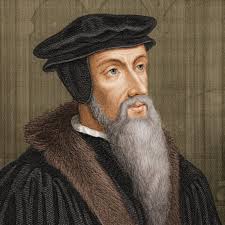
Are we Predestined?

Christ is the true Chosen One and the true Elect. But the body of Christ is, as it implies, a corporate body, made up of many members.
When we are saved or born again by faith in Jesus, we are put into one body, the body of Christ. That is what it means to be "in Christ". All those in Christ automatically become part of the body of the Chosen One, Christ, and therefore they too are considered "chosen" and "elect". What did they do to become part of the "chosen"? They believed in Jesus.
If God only chose some for salvation and others for destruction, without them having any input whatsoever, then God does not love the whole world - He only loves PART of the world. The other part - He hates.
If that is true, and the Calvinists say that it is, then the Bible is filled with lies, like John 3:16.
You have your opinion
 
That has been my statement and I stick by it.
...but you ignore my questions about the implications of this statement. ?

Since everyone is equally evil in this life and no one can come to HIM without grace:
Ephesians 2:8-9, which says, "For by grace you have been saved through faith, and that not of yourselves; it is the gift of God, not of works, lest anyone should boast."
so what HE is seeing by HIS foreknowledge is the results of HIS own work, not any decision of theirs.

How is their condemnation then just? Why did HE not give grace to all if HE loved them so much and

why did HE create those HE foreknew would end in hell
when HE tells us in various scriptures that HE does everything for HIS pleasure but takes no pleasure in the death of anyone and wants everyone to repent...?
 
That has been my statement and I stick by it.

I so feel like I should tell you if you dont understand why as me why He did not "give" grace to all.

I came out of the Predestined cult. My church still is... Why do I still go there? Because there is no single church without it's flaws
and I can get preached to and prayed for and take Holy Communion and all the other stuff without embracing the Calvin teachings that my church follows with the Westminster Confession of Faith.

I came out of it once I learned that Calvin and the WCF (which followed Calvin both say III. By the decree of God, for the manifestation of His glory, some men and angels[6] are predestinated unto everlasting life; and others foreordained to everlasting death.[7]

So there was never a chance for God to give grace to all. But he will give grace to those who chose him, and that comes by the
faith we get, and that faith is not "given" to us but come ... as told in Romans 10:17 So then faith comes by hearing, and hearing by the word of God.

The scripture that is at the core of all predestined believers "For by grace you have been saved through faith, and that not of yourselves; it is the gift of God, not of works, lest anyone should boast." is equally applicable to predestined as welll as to free will believers.
Sorry, your effort does NOT free you from predestination - it just causes more serious implications.
 
Would y'all that believe we are chosen before the fall tell me the reason for HIS choice of some not others?

Is this some forbidden topic or something that no one gives a reason except HE felt like it against those verses that say HE wants no one to die and all to be saved???
 
Would y'all that believe we are chosen before the fall tell me the reason for HIS choice of some not others?
None deserve salvation. Justice is all men damned for their sins. The real question is this: “Why did God choose any, when NONE deserved it?”

Is this some forbidden topic or something that no one gives a reason except HE felt like it against those verses that say HE wants no one to die and all to be saved???
There are actually not that many verses … but those that exist tend towards God not wanting any of His beloved (those God chose to love for reasons unknown to men) to perish.
 
None deserve salvation. Justice is all men damned for their sins. The real question is this: “Why did God choose any, when NONE deserved it?”
That's easy. Because real justice is not a character trait of the god of Calvinism.
There are actually not that many verses … but those that exist tend towards God not wanting any of His beloved (those God chose to love for reasons unknown to men) to perish.
The god of Calvin obviously doesn't love everyone but tells us that we should love not only ourselves but all of our neighbors and our enemies. Again, that must be because the god of Calvin doesn't have to do what He tells us we should do.
 
...but you ignore my questions about the implications of this statement. ?

Since everyone is equally evil in this life and no one can come to HIM without grace:
Ephesians 2:8-9, which says, "For by grace you have been saved through faith, and that not of yourselves; it is the gift of God, not of works, lest anyone should boast."
so what HE is seeing by HIS foreknowledge is the results of HIS own work, not any decision of theirs.
Darn.... So much to say and so little time.

Your : so what HE is seeing by HIS foreknowledge is the results of HIS own work, not any decision of theirs. Is not correct.
Foreknowledge is NOT the result of His own work.

Try to think of God's foreknowledge as ......
Think of a perfectly recorded security video that you watch later. When you watch the recording, you now know exactly what the people in the shop freely chose to do yesterday. Your knowledge didn’t cause their choices, and it isn’t “the result of your own work.” You simply see what they actually, freely did. God is like someone who always sees the finished, perfect recording .... except He never had to wait for the recording to be made, because from His timeless perspective the whole thing simply is.


God’s foreknowledge isn’t Him looking at the results of His own work; it’s Him eternally seeing the results of our work .... our real, free choices ..... without ever being surprised or having to wait.


What The Heavenly Father is seeing by His foreknowledge is the end. The finality of His creation. The fulfillment of His plan.

There was no time before the words In the beginning appeared. But The Father, Son and Holy Spirit were before those words were ever uttered and put into writing.

Our Heavenly Father had a plan. He spent time. (No idea how much) working out every single detail from how long it take gnats to find pressed grape juice in a closed up room to the ability of Ai to start to answer a question before you finish asking it.
Did He do this instantly or put thought into it? IDK. I do know it was and it is.

And I do know He sees everything at once. From "In the beginning" being said to the Great White Throne judgement.

Nothing surprises him. For he has already seen it.

Consider this....

Foreknowledge in Scripture is relational and does often precede God's action , not just the result of it.

We are told in Romans 8:29 ....“For those whom He foreknew, He also predestined…”

The verb προέγνω (foreknew) is used of persons, not of facts or events God will later cause.

In Acts 2:23, Jesus was delivered up “according to the definite plan and foreknowledge of God” ....yet the same verse says wicked men crucified Him by their own hands. God’s foreknowledge does not erase their responsibility.

Even in Amos 3:2 “You only have I known of all the families of the earth” (same verb ידע). It means chosen/entered into relationship, not “I unilaterally decided to cause everything in you.”

So biblical foreknowledge is personal and relational, not merely “God foresaw His own irresistible work.”

Then we must see that The Bible repeatedly treats faith as something God sees and responds to, not something He unilaterally imposes

Romans 4:3 – Abraham “believed God, and it was credited to him as righteousness.”Paul quotes Genesis 15:6 before any mention of regeneration or irresistible grace.

Hebrews 11 – Every single hero listed is commended because “by faith” they did something. The writer never says “God first regenerated them so they could believe.”

Acts 16:30–31 – The jailer asks, “What must I do to be saved?” Paul answers, “Believe in the Lord Jesus, and you will be saved.” No hint that the belief itself is first given irresistibly.

If faith were always and only the automatic result of an irresistible work, these appeals make no sense.

Ephesians 2:8 ITSELF distinguishes grace and faith

“By grace you have been saved διὰ πίστεως — and this not of yourselves, it is the gift of God — not of works…”

The nearest antecedent of “this” (τοῦτο) is the whole clause “you have been saved by grace through faith.”But even Calvinistic scholars (e.g., John Stott, Wayne Grudem) admit the grammar most naturally makes faith the thing that is “not of yourselves.”

Yet the verse sharply contrasts faith with “works.” If faith were itself an irresistible gift implanted with no regard to the person’s response, why go out of the way to say it is “not of works”?

Think in terms of The causal reading (“because of faith”) actually strengthens the anti-boasting argument

If διὰ πίστεως means “because of faith,” then the text is saying: “You are saved by grace because of your faith — and even that faith is not a work you can boast in, because it’s not self-generated merit.”

This preserves the total exclusion of boasting without having to make faith itself the product of irresistible regeneration.

NOW​


If God only foreknows the faith He Himself irresistibly causes, then why does Scripture everywhere present faith as the condition God looks for and responds to (John 1:12; 3:16; 5:24; 6:40; 20:31; Acts 16:31; Rom 4:5, etc.)?”

“Foreknowledge in Romans 8:29 is of persons, not of the faith God will later force into them.”

“Even if faith is a gift, the Bible still treats it as something God sees in people and credits as righteousness (Rom 4:3–5), not something He secretly plants so He can ‘foresee’ His own work.”

In short: the monergistic explanation turns foreknowledge into “foresaw My own causation,” but Scripture consistently presents foreknowledge and predestination as God’s response to real persons who will believe — and the causal reading of Ephesians 2:8 (“saved by grace because of faith”) fits that biblical pattern perfectly.

Okay, I'll stop as I got carried away.
How is their condemnation then just? Why did HE not give grace to all if HE loved them so much and

why did HE create those HE foreknew would end in hell
when HE tells us in various scriptures that HE does everything for HIS pleasure but takes no pleasure in the death of anyone and wants everyone to repent...?
It is not just.... It is the reason that put the end to my having once been predestined leaning very comfortable in my own wretched skin but the thought that we have always been told God loved us made me question how this could be.

It is bad enough to wonder why God would have deliberately made people who could not or would not be saved, but that they
would end their lives ... depending on who you listen to... damned or in hell... is too much to think about when they had no option. If it was just that certain folks were needed for certain of Gods plans... such as Pharoah....Judas.... or whomever would die and cease to be... it would not be too bad.

So I came to the conclusion that had to be wrong and I turned myself 180 degrees.

What did I not answer that you still have questions on?
 
Sorry, your effort does NOT free you from predestination - it just causes more serious implications.
Am I a reprobate by your standards?
 
That's easy. Because real justice is not a character trait of the god of Calvinism.

The god of Calvin obviously doesn't love everyone but tells us that we should love not only ourselves but all of our neighbors and our enemies. Again, that must be because the god of Calvin doesn't have to do what He tells us we should do.
I am unfamiliar with this “god of Calvin(ism)” of which you speak. I only offer observations on the God of the Bible as He has revealed Himself in His Holy Word.
  • God sends the rain and sun and gives breath to his children and enemies alike … and calls on us to follow his example by doing good to all to whom we are able.
  • God is “long suffering” towards those that do wrong, allowing them to store up wrath for the day of wrath … and calls on us to do the same, leaving vengeance for God and the day of wrath.
  • God calls on all men (without exception) to repent (turn from evil towards good) and, irrespective of the fact that “no one seeks God” and those who sin “flee from the light” … God calls upon us to do the same by forgiving “seventy times seven” all who ask.
 
God.
I am unfamiliar with this “god of Calvin(ism)” of which you speak. I only offer observations on the God of the Bible as He has revealed Himself in His Holy Word.
  • God sends the rain and sun and gives breath to his children and enemies alike … and calls on us to follow his example by doing good to all to whom we are able.
  • God is “long suffering” towards those that do wrong, allowing them to store up wrath for the day of wrath … and calls on us to do the same, leaving vengeance for God and the day of wrath.
  • God calls on all men (without exception) to repent (turn from evil towards good) and, irrespective of the fact that “no one seeks God” and those who sin “flee from the light” … God calls upon us to do the same by forgiving “seventy times seven” all who ask.
How can you believe what is in your signature ( “No one can come to Me [TOTAL INABILITY] unless the Father who sent Me [UNCONDITIONAL] draws him [IRRESISTIBLE]; and I will raise him up on the last day [PRESERVATION].” - John 6:44and not know every single thing about what Calvin wrote about God?

Calvin believed what he wrote because Calvin believed the scriptures you read prove his beliefs. Clvin was a minister in his day and because of his writings the Westminster Confession of Faith came into being. Even SDA Ellen White believed him.

Now... read about Calvin because he taught predestination and based on your signature, that is your belief.
He was also, what is referred to as, a double predestination teacher... and the original article I had from him is no longer around
but people should know where the origins of some of the beliefs come from


Yet few have read Calvin's own teaching on this subject. Further, many mischaracterize and misapply the doctrine in ways that were abhorrent to Calvin. So here is a brief overview of Calvin's careful proof of predestination from the Scriptures, his careful use of the doctrine, and his pastoral care in using the doctrine.

Calvin’s Careful Proof of Predestination

Calvin's magnum opus is entitled The Institutes of the Christian Religion. How Calvin upholds and applies the doctrine of election in this work is instructional.

In The Institutes, Calvin defines this doctrine in the following manner:

By predestination we mean the eternal decree of God, by which he determined with himself whatever he wished to happen with regard to every man. All are not created on equal terms, but some are preordained to eternal life, others to eternal damnation; and, accordingly, as each has been created for one or other of these ends, we say that he has been predestinated to life or to death. [John Calvin. Institutes of the Christian Religion, ed. John T. McNeill, trans. Ford Lewis Battles, 2 vols. (Philadelphia: Westminster Press, 1960), 3.21.5.]
Calvin then offers Scriptural support for this definition by tracing the development of this doctrine through the increasing revelation of the Bible in the following steps:

1. He begins with Abraham, showing how the Lord chose this man to be His special representative out of all the people of the world. Most Christians do not struggle with accepting the truth that Abraham was chosen by God, and immediately Calvin personalizes this doctrine by using Abraham.

2. Consequently, Calvin shows that Israel who descended from Abraham was also then chosen by God. He quotes verses such as Deuteronomy 7:7-8 which says, “The Lord did not set his love upon you, nor choose you, because you were more in number than any people: for ye were the fewest of all people: but because the Lord loved you.”

3. Calvin then goes on to speak of a deeper dimension of predestination, that in the Old Testament we see a more special election still of God saving certain ones out of the nation of Israel. Calvin says that his readers must see how “the grace of God was displayed in a more special form, when of the same family of Abraham God rejected some.” He then refers to Malachi 1:2-3 which explicitly states, “Was not Esau Jacob’s brother? saith the Lord: yet I loved Jacob, and I hated Esau.” [Calvin, Institutes, 3.21.6.]

4. Finally, Calvin comes into the New Testament and shows how the Apostle Paul in Romans quotes this very text from Malachi to substantiate predestination. He quotes from Romans 9:15, itself another quote from the Old Testament: “For he (the Lord) saith to Moses, ‘I will have mercy on whom I will have mercy, and I will have compassion on whom I will have compassion.’” Calvin then later asks,

And what pray, does this mean? It is just a clear declaration by the Lord that he finds nothing in men themselves to induce him to show kindness, that it is owing entirely to his own mercy, and, accordingly, that their salvation is his own work. Since God places your salvation in himself alone, why should you descend to yourself? [Calvin, 3.22.6.]
So important was it to Calvin to believe this doctrine that he said, “We shall never feel persuaded as we ought that our salvation flows from the free mercy of God as its fountain, until we are made acquainted with his eternal election.” [Calvin, 3.21.1.] Yet even though he saw eternal election this way, he also stressed a need for caution.

Calvin’s Carefulness with Predestination

Calvin was far more careful with this doctrine than his critics were and are. Calvin understood men would react strongly against predestination. “The human mind, when it hears this doctrine, cannot restrain its petulance, but boils and rages as if aroused by the sound of a trumpet.” [Calvin, 3.23.1.] People who hear the teaching of predestination rarely remain unaffected by it. Their hearts too become enflamed, either with these teachings or against them. Calvin offers caution in the wrongful handling of this doctrine.

He does so by warning his readers not to make anything else but God’s will their ultimate trust.

The will of God is the supreme rule of righteousness, so that everything which he wills must be held to be righteous by the mere fact of his willing it. Therefore, when it is asked why the Lord did so, we must answer, ‘Because he pleased.’ But if you proceed farther to ask why he pleased, you ask for something greater and more sublime than the will of God, and nothing such can be found. [Calvin, 3.23.2.]
Calvin taught that God’s will is to be our resting place. He cautions those trying to go beyond the limit of their understanding. When men hear of election, they immediately want to ask, “Why would God choose some, and not others?” To this Calvin replied: “When they inquire into predestination, let then remember that they are penetrating into the recesses of the divine wisdom, where he who rushes forward securely and confidently, instead of satisfying his curiosity will enter in (an) inextricable labyrinth.” [Calvin, 3.21.1.] God’s thoughts are higher than man’s, and men will be trapped in a mental maze if they try to understand things that are beyond their human comprehension.

Calvin goes on to say, “Let it, therefore, be our first principle that to desire any other knowledge of predestination than that which is expounded by the word of God, is to be no less infatuated (or crazed) than to walk where there is no path, or to seek light in darkness.” [Calvin, 3.21.2.] For Biblical support, he quoted Deuteronomy 29:29, “The secret things belong unto the Lord our God: but those things which are revealed belong unto us, and to our children forever.” Calvin even demonstrated his commitment to this truth in his placement of his teaching on predestination in The Institutes. In the final edition, he moved his section on predestination from the beginning of his work to a place following his teaching on redemption, in effect suggesting “that predestination is a doctrine best understood by believers after they come to know the redemptive work of Jesus Christ applied by the Holy Spirit.” [Derek Thomas, “Bowing before the Majesty of God,” Preaching Like Calvin: Sermons from the 500th Anniversary Celebration, ed. David W. Hall (Phillipsburg, N.J: P & R Publishing, 2010), 252.]

Calvin then addresses the mistaken notion that election removes human responsibility. Many today associate John Calvin with an aberration of his teaching called Hyper-Calvinism, which is a doctrine that emphasizes divine sovereignty to the exclusion of human responsibility. Among other things, Hyper-Calvinism would deny 1) that gospel invitations are to be delivered to all people without exception; 2) that men can be urged to come to Christ; and 3) that God has a universal love. To Calvin these teachings were monstrous distortions of truth.

Another argument which they employ to overthrow predestination is that if it stand, all care and study of well doing must cease. For what man can hear (say they) that life and death are fixed by an eternal and immutable decree of God, without immediately concluding that it is of no consequence how he acts, since no work of his can either hinder or further the predestination of God? [Calvin, Institutes, 3.23.12.]
What was Calvin’s answer? He reminds his readers what the predestinated are predestined to do! He points out what the Apostle Paul said in Ephesians 1:4, where he reminds us that the end for which we are elected is “that we should be holy, and without blame before him.” “If the end of election is holiness of life, it ought to arouse and stimulate us strenuously to aspire to it, instead of serving as a pretext for sloth.” [Calvin, 3.23.12.] He develops how predestination should lead us to fear God all the more, and consequently should both comfort us and spur us on even in the worst of times to greater holiness.

Calvin’s Pastoral Care in Using Predestination

Calvin exemplified a pastoral use of this doctrine, patterned after Christ and the apostles, who used this doctrine in two chief ways - to humble the proud and to comfort the humble.

The ministry of the Word thus required more than the public exposition of Scripture: it also entailed the declaration and application of God’s Word to individual women and men, girls and boys, through the sacraments, corrective discipline, catechetical instruction, household visitations, and spiritual counsel and consolation. As Calvin noted in his liturgy, ‘the office of a true and faithful minister is not only to teach the people in public, which is he appointed to do as a pastor, but also, as much as he is able, to admonish, exhort, warn, and console each person individually. [Scott M. Manetsch, Calvin’s Company of Pastors: Pastoral Care and the Emerging Reformed Church, 1536-1609 (Oxford; New York: Oxford University Press, 2012), 256.]

Robert Godfrey provides an example of this pastoral use of predestination from Calvin’s life. [I am greatly indebted to Robert Godfrey for this section. See Robert Godfrey, “The Counselor to the Afflicted,” John Calvin: A Heart for Devotion, Doctrine, Doxology, ed. Buck Parsons (Lake Mary, FL: Reformation Trust Publishing, 2008), 88-90.] In this example, the office of the minister is seen to be expanded beyond merely a pulpit ministry.

In Volume 4 of John Calvin’s Tracts and Letters, a letter written by Calvin in April of 1541 can be found. It is a fairly lengthy letter written to Monsieur de Richebourg because his son Louis, a young man, had recently died. Louis had been a student of Calvin at the Academy in Geneva, and the impact of his young friend’s death can be heard at the beginning of this letter to the deceased’s father:

When I first received the intelligence of the death…of your son Louis, I was so utterly overpowered that for many days I was fit for nothing but to grieve…I was somehow upheld before the Lord by those aids wherewith he sustains our souls in affliction,…however, I was almost a nonentity. [Parsons, John Calvin, 88.]
In this letter, we see Calvin using predestination as a “doctrine of comfort.” Listen to how Calvin then uses the doctrine of predestination to minister to this grieving father.

There is nothing which is more dispiriting to us than while we vex and annoy ourselves with this sort of question – Why is it not otherwise with us? Why has it so happened that we came to this place? [In other words, why has God allowed this to happen to us?] ...It is God, therefore, who has sought back from you your son, whom he committed to you to be educated, on the condition, that he might always be his own. And therefore, he took him away, because it was both of an advantage to him to leave this world, and by this bereavement to humble you, or to make trial of your patience. If you do not understand the advantage of this, without delay, first of all, set aside every other object of consideration, and ask of God that he may show you. Should it be his will to exercise you still further, by concealing it from you, submit to that will, that you may become the wiser than the weakness of your own understanding can ever attain to.” [Bruce Gordon, Calvin, Reprint edition (New Haven, Conn.; London: Yale University Press, 2011), 302.]
The last sentence is rather remarkable. “Should it be his will to exercise you still further, by concealing it from you, submit to that will, that you may become the wiser than the weakness of your own understanding can ever attain to.” Calvin shows how much wisdom and comfort can be found in submitting to God’s divine will, trusting Him regardless of how much or how little of that will He has revealed to the afflicted. In so doing, he reveals to us true pastoral care in using this Biblical doctrine.

 
How can you believe what is in your signature ( “No one can come to Me [TOTAL INABILITY] unless the Father who sent Me [UNCONDITIONAL] draws him [IRRESISTIBLE]; and I will raise him up on the last day [PRESERVATION].” - John 6:44and not know every single thing about what Calvin wrote about God?
I came to Biblical truths from the Bible. I never read “The Institutes”. Many historic theologians have read the same scriptures as me and discovered the same verses and truths revealed in those verses that I did. That Calvin (or Wesley or Augustine or Jerome) discovered some of the same truths that I did, comes as no surprise.

I believe what is in my signature because Jesus said it (and God inspired John to record it), not because Calvin (or the Synod of Dort) agrees with it.

I would point out that there is no “L” in my signature. God did not actually SAY it, so I do not embrace it as established Biblical Truth.

God did say (throughout scripture):
  • “No one can come to me” (T)
  • “a gift, not of yourselves, that no one should boast” (U)
  • “will come” (I)
  • “no one will snatch them out of my hand” (P)
So just like John 6:44 states in my signature, I believe God’s word.
 
None deserve salvation. Justice is all men damned for their sins. The real question is this: “Why did God choose any, when NONE deserved it?”
So you cannot answer the question... I agree, this theology has no answer to this question.

I deny all sinners are damned as only those who have never believed are condemned already... the word already has to have meaning:
Berean Standard Bible
Jn 3:18 Whoever believes in Him is not condemned, but whoever does not believe has already been condemned, because he has not believed in the name of God’s one and only Son.
 
The last sentence is rather remarkable. “Should it be his will to exercise you still further, by concealing it from you, submit to that will, that you may become the wiser than the weakness of your own understanding can ever attain to.” Calvin shows how much wisdom and comfort can be found in submitting to God’s divine will, trusting Him regardless of how much or how little of that will He has revealed to the afflicted. In so doing, he reveals to us true pastoral care in using this Biblical doctrine.
I’m sure it is a comforting thought to accept your condemned to hell without recourse. Such absolute nonsense…

Doug
 
So you cannot answer the question... I agree, this theology has no answer to this question.

I deny all sinners are damned as only those who have never believed are condemned already... the word already has to have meaning:
Berean Standard Bible
Jn 3:18 Whoever believes in Him is not condemned, but whoever does not believe has already been condemned, because he has not believed in the name of God’s one and only Son.

“ALREADY condemned” has the same meaning as “IS not condemned” … both indicate a “decision or judgement” has already been made prior to this moment in time. Verses 19-21 go on to describe this “decision or judgement”.

[Jhn 3:18-21 ESV] 18 Whoever believes in him is not condemned, but whoever does not believe is condemned already, because he has not believed in the name of the only Son of God. 19 And this is the judgment: the light has come into the world, and people loved the darkness rather than the light because their works were evil. 20 For everyone who does wicked things hates the light and does not come to the light, lest his works should be exposed. 21 But whoever does what is true comes to the light, so that it may be clearly seen that his works have been carried out in God."
The “already condemned” …
  • Love darkness (being away from the light of God).
  • Do EVIL works.
  • Hates the light (God).
  • Does not come to the light (God).
  • v.20 tells you WHY: they do not want their evil works to be exposed.
Now we know why those “already condemned” for unbelief remain condemned and remain in unbelief.
According to Ephesians 2, EVERYONE starts out in sin and condemnation.

The “not condemned” …
  • Do what is true.
  • Come to the light (God)
  • Do works “in God” (not in themselves).
Ephesians 2 also tells us what the saved are saved … God makes them alive and God gives them a gift.
 
Did you see the latest T-shirt with a picture of a stern John Calvin wearing a Santa's hat and coat saying: "EVERYONE is on the NAUGHTY LIST"? The picture is labeled "Calvinist Santa".

This is a pretty accurate understanding of the "god" of John Calvin, obviously not the God of the Bible.

Apparently they have mugs with the same picture.
 
I’m sure it is a comforting thought to accept your condemned to hell without recourse. Such absolute nonsense…

Doug
Read Roman 1:18-32

[Rom 1:18-32 ESV] 18 For the wrath of God is revealed from heaven against all ungodliness and unrighteousness of men, who by their unrighteousness suppress the truth. 19 For what can be known about God is plain to them, because God has shown it to them. 20 For his invisible attributes, namely, his eternal power and divine nature, have been clearly perceived, ever since the creation of the world, in the things that have been made. So they are without excuse. 21 For although they knew God, they did not honor him as God or give thanks to him, but they became futile in their thinking, and their foolish hearts were darkened. 22 Claiming to be wise, they became fools, 23 and exchanged the glory of the immortal God for images resembling mortal man and birds and animals and creeping things. 24 Therefore God gave them up in the lusts of their hearts to impurity, to the dishonoring of their bodies among themselves, 25 because they exchanged the truth about God for a lie and worshiped and served the creature rather than the Creator, who is blessed forever! Amen. 26 For this reason God gave them up to dishonorable passions. For their women exchanged natural relations for those that are contrary to nature; 27 and the men likewise gave up natural relations with women and were consumed with passion for one another, men committing shameless acts with men and receiving in themselves the due penalty for their error. 28 And since they did not see fit to acknowledge God, God gave them up to a debased mind to do what ought not to be done. 29 They were filled with all manner of unrighteousness, evil, covetousness, malice. They are full of envy, murder, strife, deceit, maliciousness. They are gossips, 30 slanderers, haters of God, insolent, haughty, boastful, inventors of evil, disobedient to parents, 31 foolish, faithless, heartless, ruthless. 32 Though they know God's righteous decree that those who practice such things deserve to die, they not only do them but give approval to those who practice them.

At what point in being granted the freedom to follow their desires (unrestrained free will) did these people regret their freedom and shake their fist at God for not “Irresistibly Drawing” them?
  • Was it when they: (v.21) knew God but did not honor him as God or give thanks to him, but became futile in their thinking, and their foolish hearts were darkened?
  • Was it when God: (v.24) gave them up in the lusts of their hearts to impurity?
  • Was it when God: (v.26) gave them up to dishonorable passions?
  • Was it when they: (v.28) did not see fit to acknowledge God, so gave them up to a debased mind to do what ought not to be done?
  • Was it when they: (v.29) were filled with all manner of unrighteousness, evil, covetousness, malice, envy, murder, strife, deceit, and maliciousness?
  • Was it when they: (v.30) were haters of God and inventors of evil?
  • Perhaps they secretly longed for God’s irresistible draw when they: (v.32) knew God's righteous decree that those who practice such things deserve to die, but did them and encouraged others to join them?

I do not think they are concerned about their eternal fate.
For someone that hates God, HELL would be spending an eternity in His presence.
However, such matters are ultimately above my pay grade, so I am content to trust in the GOODNESS of God to do what is Right (in every case and whether I understand or not).
 
Did you see the latest T-shirt with a picture of a stern John Calvin wearing a Santa's hat and coat saying: "EVERYONE is on the NAUGHTY LIST"? The picture is labeled "Calvinist Santa".

This is a pretty accurate understanding of the "god" of John Calvin, obviously not the God of the Bible.

Apparently they have mugs with the same picture.
OK, that is pretty funny.

However, didn’t Calvin discover the UNCONDITIONAL love of God and a monergistic salvation that places some “naughty” children on the “nice” list just because God loved them (not because of any merit on their part)?
 
There are actually not that many verses … but those that exist tend towards God not wanting any of His beloved (those God chose to love for reasons unknown to men) to perish.
OK, sarcasm muted...sigh.

Any reason had to be loving and righteous, not fickle nor unloving. So, since I contend that damning someone before their creation is unloving, hell being what it is and all, I must accept that there was another honest reason.

And the line of logic that sits the most right with me is that there is no mysterious reason for their creation to be damned as eternally planned. Iow, there is no hidden reason for this demeaning supposition, it is a solid theological mistake, not a hidden reason!

There are two suppositions about predestination to damnation having a hidden quality:
1. GOD damned them for some hidden reason before their creation and then created them to be sent to eternal fire to fulfill HIS predestined decision about their fates.
or
2. HE has hidden from us that we had an existence, a life before our earthly life and in that life we chose our own FATE, heaven or hell, by faith, not proof, and our LIVES here on earth merely express the outcomes of our own personal free will decisions.

Gee, which should I accpt...I think I like door 2 better as a hidden reason I can accept. And lo ! I find a multitude of hints in scripture, hidden by eisegesis, that #2 is in fact the truth, the hidden reason some are predestined before their lives here on earth to hell because their conception on earth is not their creation at all!

This is obviously perfectly in keeping with HIS self revelation of HIS being love, righteous and just and the necessity of giving us an uncoerced free will to be able to become a true bride truly married to HIM in heaven.
 
Back
Top Bottom