@Runningman God is a Trinity

Who else but the one true God could say:
“For My own sake, for My own sake, I will act; For how can My name be profaned? And My glory I will not give to another.” (Isa. 48:11)
No one should have the slightest difficulty in identifying the speaker as God. The context of the passage and the grammar of the text are both very clear. But prejudiced anti-Trinitarians must object because the God who is speaking says that He, along with the Holy Spirit, are sent by God.
“Come near to Me, listen to this: From the first I have not spoken in secret, from the time it took place, I was there. And now the Lord GOD has sent Me, and His Spirit.” (Isa. 48:16)
If the passage is interpreted in its natural and normal meaning, there are three persons in this passage who are all God! But how can God be sent by God unless there are several Persons within the Godhead? Since the Father sent the Son and the Spirit in Trinitarian theology, this is exactly the kind of passage which we expect to find.
How can non-Trinitarians handle a passage like this? They can’t. So they deny that the speaker is God and claim that it is actually Isaiah who is speaking in either verse 16b or the whole of verse 16!
The attempt to interject Isaiah into verse 16 falls before the following questions:
1. Is there anything in the Hebrew text to indicate a break in the speech of Jehovah? No.
2. Does Isaiah elsewhere in his book dare to interrupt the Almighty and to insert himself? No.
3. Is there any evidence whatsoever in the text to indicate that anyone else besides God is speaking? No.
4. Has any translation ever separated verse 16 from the rest of Jehovah’s speech? No.
5. Does the Septuagint make a break in verse 16? No.
6. Do the Targums? No.
This passage is clear proof that the authors of the Bible believed that God was multi-personal. A Trinitarian would not have the least hesitation to write the text as it stands. But Unitarians, Arians, Modalists, and Muslims could never do so.
If I as the first person promise to do something for you as the second person through a third person, am I not implying that I am not the same as the third person? If grammar means anything, the answer is, “Yes.”
Robert A. Morey, The Trinity



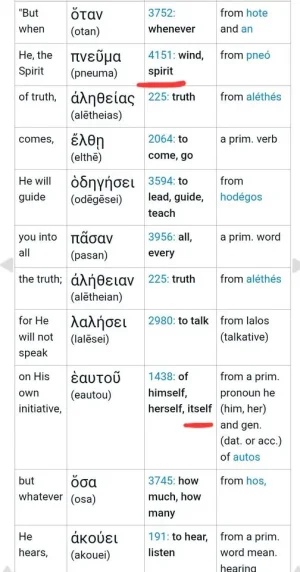


 Nice and Clear!


