Who walked on water? made storm cease to rage? Forgave sins, and physical resurrected form the tomb?Which is just a sample of what a man is capable of when they are empowered by God. Others did the same sort of miracles.

You are using an out of date browser. It may not display this or other websites correctly.
You should upgrade or use an alternative browser.
You should upgrade or use an alternative browser.
Christendom's Trinity: Where Did It Come From?
- Thread starter Alter2Ego
- Start date

Peterlag
Active Member
John 10:33 is not a teaching on the trinity or that we should believe or confess that Jesus is God. Had the translators rendered the Greek text in verse 33 as they did in verse 34 and 35, then it would read, "...you, a man, claim to be a god." In the next two verses, John 10:34 and 35, the exact same word (theos, without the article) is translated as "god" and not "God." In Acts 12:22, Herod is called theos without the article, so the translators translate it "god." The same is true in Acts 28:6, when Paul had been bitten by a viper and the people expected him to die. When he did not die, "...they changed their minds and said he was a god." Since theos has no article, and since it is clear from the context that the reference is not about the true God, theos is translated "a god." It is a general principle that theos without the article should be "a god," or "divine." Since there is no evidence that Jesus was teaching that he was God anywhere in the context, and since the Pharisees would have never believed that this man was somehow Yahweh, it makes no sense that they would be saying that he said he was "God." Now since Jesus was clearly teaching that he was sent by God and was doing God's work. Thus, it makes perfect sense that the Pharisees would say he was claiming to be "a god" or "divine."Rather than trust OUR judgement, why don't we ask the NATIVE SPEAKERS that were actually there and heard Jesus words first hand how THEY understood THEIR native language?
John 8:57-59 [NKJV]
Then the Jews said to Him, "You are not yet fifty years old, and have You seen Abraham?"
Jesus said to them, "Most assuredly, I say to you, before Abraham was, I AM."
Then they took up stones to throw at Him; but Jesus hid Himself and went out of the temple, going through the midst of them, and so passed by.
Why do Jews take up stones to stone someone? Here is an explanation of why:
John 10:31-33 [NKJV]
Then the Jews took up stones again to stone Him. Jesus answered them, "Many good works I have shown you from My Father. For which of those works do you stone Me?"
The Jews answered Him, saying, "For a good work we do not stone You, but for blasphemy, and because You, being a Man, make Yourself God."
The Jews did not believe, but they understood what Jesus was saying ... even if you refuse to understand Jesus' plain words.
The trinitarian has only 3 to pick from...
1.) Use a verse from a bad translation.
2.) Use a verse that is taken out of context.
3.) Not understand how the words were used in the culture they were written in.
And basically that's all trinitarians have. And I mean 100 percent of what they have. They have nothing else.
Peterlag
Active Member
So this is the whole entire teaching in the Bible where all should believe that Jesus is God. Even though we do not read any of the following in Scripture...Nobody, except Jesus. That is another area in which He is unique.
Notice the difference between your prayer and Jesus'. You prayed for what was "given me in Christ Jesus before the world began". Jesus prayed, "with the glory which I had with You before the world existed". You are praying for something you were promised. Jesus prayed for something He already had, that he already possessed.
- Deity
- Co-equal
- Co-eternal
- Incarnated
- Eternal son
- Infinite son
- God the son
- One substance
- Persons of God
- God became man
- Eternally begotten
- Pre-existent Christ
- God the Holy Spirit
- Pre-incarnate Christ
- Three persons, three in one
- Trinity, Triune God, Tri-unity
- Two nature's, Hypostatic union

atpollard
Active Member
I trust the reaction of people fluent in Aramaic and Hebrew to understand something spoken in Aramaic and Hebrew over some non-native 'scholar' centuries later second-guessing a Koine Greek account of the event. John reporting what they heard and did not believe is more credible than your denying what they heard.Why would you trust the words of individuals with a stated motive to kill Jesus?

The New Testament contains abundant indications of the deity of Jesus. Philippians 2:5–11 is a powerful passage. In verse 6, Paul says of Jesus that “being in very nature God, He did not consider equality with God something to be grasped.”
The word translated “in very nature,” or “in the form of,” is the Greek morphē. It is the word that refers to the full set of characteristics which make something that which it is, as contrasted with the word schēma, which is the external appearance, or facade, which does not necessarily indicate the true nature of the thing.
The word translated “in very nature,” or “in the form of,” is the Greek morphē. It is the word that refers to the full set of characteristics which make something that which it is, as contrasted with the word schēma, which is the external appearance, or facade, which does not necessarily indicate the true nature of the thing.
Doug Brents
Active Member
I love it how we have such a good discussion about truth, but then when your beliefs run up against, and are found contrary to, Scripture you immediately redirect to a smokescreen. Go back to post 895 and actually respond to the statements within.So this is the whole entire teaching in the Bible where all should believe that Jesus is God. Even though we do not read any of the following in Scripture...
Or any combination of 1st person, 2nd person, 3rd person.

e v e
Active Member
God is a person with a nature. Jesus is a person with the divine nature. Others have the divine nature too. No one is the same person as the Father though. I think people are not realizing that Lord God Almighty is an actual single person sometimes.
I never said the Father is the same being. Of course He is not.

Runningman
Active Member
So God and Jesus aren't the same being.I never said the Father is the same being. Of course He is not.
John 14
1“Do not let your hearts be troubled. You believe in God; believe in Me as well.
Runningman
Active Member
Jesus called those very people you are defending liars to their face and said they don't understand him just moments before. Yet here you are telling us that Jesus' accusers had correctly understood him? I will take the words of Jesus over someone of the same beliefs and opinions as those who Jesus condemned as liars.I trust the reaction of people fluent in Aramaic and Hebrew to understand something spoken in Aramaic and Hebrew over some non-native 'scholar' centuries later second-guessing a Koine Greek account of the event. John reporting what they heard and did not believe is more credible than your denying what they heard.
John 8
43Why do you not understand what I am saying? It is because you are unable to accept My message. 44You belong to your father, the devil, and you want to carry out his desires. He was a murderer from the beginning, refusing to uphold the truth, because there is no truth in him. When he lies, he speaks his native language, because he is a liar and the father of lies. 45But because I speak the truth, you do not believe Me!
Ready to get with what Jesus' point is yet? Here's a hint: the Pharisees misunderstood him and so do you.
Peterlag
Active Member
I have not redirected. And my beliefs are not run up against. I gave you my take on John 17:5 in post 874. You did not want to believe it. Here I will list it again...I love it how we have such a good discussion about truth, but then when your beliefs run up against, and are found contrary to, Scripture you immediately redirect to a smokescreen. Go back to post 895 and actually respond to the statements within.
Timothy says that each Christian was given grace “before the ages began” (2 Timoty 1:9), no one tries to prove that we were actually alive with God back then. Everyone acknowledges that we were “in the mind of God,” i.e., in God’s foreknowledge. The same is true of Jesus Christ. His glory was “with the Father” before the world began, and in John 17:5 he prayed that it will come into manifestation.
Runningman
Active Member
It has always been a genuine curiosity to me why they immediately quote John 17:5 after Jesus taught the Father is alone the true God in John 17:3. They seem to attempt to weaponize this verse as if it were against Jesus, which is baffling - especially because they seem to think they've made a valid point. Of course, the Father isn't stripped of His exclusive, sole, singular, deity by verse 5. Not sure where these get these strange ideas.I have not redirected. And my beliefs are not run up against. I gave you my take on John 17:5 in post 874. You did not want to believe it. Here I will list it again...
Timothy says that each Christian was given grace “before the ages began” (2 Timoty 1:9), no one tries to prove that we were actually alive with God back then. Everyone acknowledges that we were “in the mind of God,” i.e., in God’s foreknowledge. The same is true of Jesus Christ. His glory was “with the Father” before the world began, and in John 17:5 he prayed that it will come into manifestation.
Peterlag
Active Member
I think I put out some great stuff on the subject of the trinity. And they write me often saying...It has always been a genuine curiosity to me why they immediately quote John 17:5 after Jesus taught the Father is alone the true God in John 17:3. They seem to attempt to weaponize this verse as if it were against Jesus, which is baffling - especially because they seem to think they've made a valid point. Of course, the Father isn't stripped of His exclusive, sole, singular, deity by verse 5. Not sure where these get these strange ideas.
We already proved you wrong.
I have already debunked you on that.
You are wrong again.
You produce nothing of substance.
You are running because you have no evideance.
You're dodging.
You're ignoring it because your back is up against the wall.
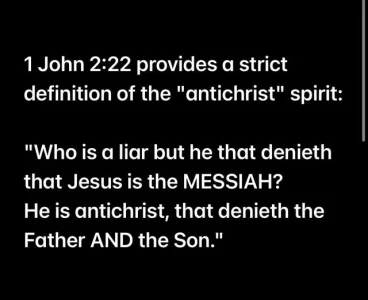

synergy
Active Member
You consistently ignore NT passages that explicitly depict conscious, communicative existence after death—like Luke 16 and Revelation—where saints are not portrayed as nonexistent but aware, speaking, and even crying out to God, while you selectively lean on OT poetic expressions about “sleep” and “the dead knowing nothing” as if they were systematic definitions of the afterlife. That’s not letting Scripture interpret Scripture, that’s filtering it, because the OT often speaks phenomenologically whereas the NT provides a fuller spiritual revelation. So you cannot responsibly build a doctrine of total unconsciousness by sidelining the very texts that clarify the issue, and until you reconcile both Testaments instead of privileging one set of verses over another, your conclusion remains skewed rather than derived from Scripture in its entirety.Death is the absence of life.
Scripture speaks of death using the analogy of 'sleep'.
Ecclesiastes says the 'dead know nothing'.
If as you say the dead are conscious - wouldn't they be praising God? Psalm 115:17 says 'the dead praise not the LORD'.
Ps. 6:5 For in death there is no remembrance of you; in Sheol who will give you praise?”
Ps. 30:9 “What profit is there in my death, if I go down to the pit? Will the dust praise you? Will it tell of your faithfulness?”
Isaiah 26:19 “Your dead shall live; their bodies shall rise. You who dwell in the dust, awake and sing for joy! For your dew is a dew of light, and the earth will give birth to the dead.” The dead are now in the dust awaiting the resurrection.
Ezekiel 37:12 “Therefore prophesy, and say to them, Thus says the Lord GOD: Behold, I will open your graves and raise you from your graves, O my people. And I will bring you into the land of Israel.”
There are many verses about the dead, being dead, being asleep in scripture but nothing about a conscious existence.
Doug Brents
Active Member
But Jesus did not say that He wanted the grace He was "promised" before the world began. He asked that the grace "He HAD with the Father" be given to Him. You continue to miss that word; He already had that grace with the Father before the world began. We didn't have God's gifts before the world began, because we didn't exist then, and we only had the promise of them then. Jesus did exist then, and He had the same grace as the Father before Creation.I have not redirected. And my beliefs are not run up against. I gave you my take on John 17:5 in post 874. You did not want to believe it. Here I will list it again...
Timothy says that each Christian was given grace “before the ages began” (2 Timoty 1:9), no one tries to prove that we were actually alive with God back then. Everyone acknowledges that we were “in the mind of God,” i.e., in God’s foreknowledge. The same is true of Jesus Christ. His glory was “with the Father” before the world began, and in John 17:5 he prayed that it will come into manifestation.

amazing grace
Active Member
Where have I ignored any scripture? Luke 16 is a parable. There's a LOT of figurative language in Revelation which a hard to understand and I doubt that anyone can honestly say they understand the figures used.You consistently ignore NT passages that explicitly depict conscious, communicative existence after death—like Luke 16 and Revelation—where saints are not portrayed as nonexistent but aware, speaking, and even crying out to God, while you selectively lean on OT poetic expressions about “sleep” and “the dead knowing nothing” as if they were systematic definitions of the afterlife. That’s not letting Scripture interpret Scripture, that’s filtering it, because the OT often speaks phenomenologically whereas the NT provides a fuller spiritual revelation. So you cannot responsibly build a doctrine of total unconsciousness by sidelining the very texts that clarify the issue, and until you reconcile both Testaments instead of privileging one set of verses over another, your conclusion remains skewed rather than derived from Scripture in its entirety.
I agree. I do tend to lean more toward clear, simple, text that are to the point. It's a principle in hermeneutics to interpret or illuminate more difficult verses in light of clear, unambiguous passages on the same subject, i.e. letting scripture interpret scripture, the Bible being its own best interpreter. Death is known in scripture and referenced in scripture in many, many places as being asleep-----sleep being the metaphor used for death in describing death.
Runningman
Active Member
That's the same kind of attempted psychological invalidation they used on Jesus as well except they would say things like he was ignorant of Scripture, demon possessed, drunk, etc. If blind and deaf people can't recognize what is from God and what is not then how can they understand what you are saying? They are spiritually discerned, meaning that certain truths about God are supernaturally hidden to them.I think I put out some great stuff on the subject of the trinity. And they write me often saying...
We already proved you wrong.
I have already debunked you on that.
You are wrong again.
You produce nothing of substance.
You are running because you have no evideance.
You're dodging.
You're ignoring it because your back is up against the wall.
Want to prove it? Just show there where the Bible explicitly defines the Father as alone the true God. Yes, they can read those words, but they can't accept or believe them yet. This is only possible when there is a powerful block in place preventing someone from seeing the truth.
Peterlag
Active Member
I get that too almost every day. That I'm the anti-Christ, doing the work of my father the devil, that I'm ignorant of the Scriptures, and that I'm full of pride, and don't know the first thing about the Bible.That's the same kind of attempted psychological invalidation they used on Jesus as well except they would say things like he was ignorant of Scripture, demon possessed, drunk, etc. If blind and deaf people can't recognize what is from God and what is not then how can they understand what you are saying? They are spiritually discerned, meaning that certain truths about God are supernaturally hidden to them.
Want to prove it? Just show there where the Bible explicitly defines the Father as alone the true God. Yes, they can read those words, but they can't accept or believe them yet. This is only possible when there is a powerful block in place preventing someone from seeing the truth.
Peterlag
Active Member
Jesus was praying that the glory the Old Testament foretold he would have, and which had been in the mind of God the Father since before the world began, would come into concretion. Trinitarians, however, teach that Jesus was praying about glory he had with God many years before his birth, and they assert that this proves he had access to the mind and memory of his “God nature.”But Jesus did not say that He wanted the grace He was "promised" before the world began. He asked that the grace "He HAD with the Father" be given to Him. You continue to miss that word; He already had that grace with the Father before the world began. We didn't have God's gifts before the world began, because we didn't exist then, and we only had the promise of them then. Jesus did exist then, and He had the same grace as the Father before Creation.
We can tell that Jesus was speaking of being in God’s foreknowledge from the immediate context. Just two verses earlier, in John 17:3, Jesus said that the Father was “the only true God.” Jesus could not have prayed that while at the same time thinking he was God too. Furthermore, Jesus spoke again about things in God’s foreknowledge in John 17:22 when he said that he had given the glory from God to his disciples. But that had not happened yet either. Both the glory of Jesus and the glory that his disciples would have was in the foreknowledge of God, and Jesus prayed about it in his prayer. Jesus knew he was the promised Messiah and Son of God, and God had spoken of his glory many centuries earlier. Now, on the eve of his arrest, he prayed to his Father, the “only true God,” and asked for God’s plan to glorify His Son to come to pass.
It also should be noted that Trinitarians have quoted Isaiah 42:8 which says that God will not give His glory to another, to show that Jesus must be God since Jesus had glory from God. The argument is fallacious for a number of reasons. The context of Isaiah 42 is about idols, and that God will not share His glory with idols. The verse, taken in context, is not saying God will never give any glory to those who obey Him, because He clearly does give glory to those who obey him.
Doug Brents
Active Member
That is what you want to twist the language to say, but that is not what Scripture SAYS!Jesus was praying that the glory the Old Testament foretold he would have, and which had been in the mind of God the Father since before the world began, would come into concretion.
Similar threads
- Replies
- 115
- Views
- 473


- Replies
- 266
- Views
- 5K

- Replies
- 2
- Views
- 74
