I Will Build My Church

Again, Egyptians do inhabit part of the land you claimed will be ethnically cleansed of all Gentiles. Are you now going to redraw that map to account for the fact that only Cannanites are mentioned in those verses? It's back to the drawing board for you.
By mentioning "Canaanites" God means "uncircumcised, non-covenant, non-Hebrews."
This means everyone who is not the seed of Abraham.
 
It begins with a promise to those who love God. That is a condition right there
No, the Scripture says differently. Moses speaks to the children of Israel and says:

6 For thou art an holy people unto the LORD thy God: the LORD thy God hath chosen thee to be a special people unto himself, above all people that are upon the face of the earth.

Notice who chose who.

7 The LORD did not set his love upon you, nor choose you, because ye were more in number than any people; for ye were the fewest of all people:
8 But because the LORD loved you, and because he would keep the oath which he had sworn unto your fathers, hath the LORD brought you out with a mighty hand, and redeemed you out of the house of bondmen, from the hand of Pharaoh king of Egypt.
9 Know therefore that the LORD thy God, he is God, the faithful God, which keepeth covenant and mercy with them that love him and keep his commandments to a thousand generations;
Deuteronomy 7:6–9.

So, it is when God FIRST sets His love upon someone, in this case, the children of Israel and the rightful inheritors of the Abrahamic Covenant, that God is faithful and will keep covenant, or promises, He made to Abraham and it is these people that receive his mercy. But only to those that love Him and show that love by obeying His Torah commandments. So, it doesn't "begin with a promise to those that love God," you have it backwards. That is furthest from the truth.
you wasted your time
These are men in the past known by God
Many have reduced the interpretive options of the term ‘foreknew’ in Roman 8:29 to either the classical Arminian concept of “foreseen” or the Calvinistic concept of “foreordained.”
Foreseen = God saw through the corridors of time who would believe and chose those individuals based on their “foreseen faith.” (Classical Arminian)
Foreordain = God set his love on certain unconditionally pre-selected individuals before the world began (“foreloved”) and effectually works to change their hearts so that they want to come to Him for salvation. (Calvinist)
But there is a third and much simpler option that is often overlooked in some modern theological circles :
Formerly Known (known before) = As in Romans 11:2, Paul is simply referring to saints of old in former times who loved God and were known by Him. Paul said, “The man who loves God is known by God” (1 Cor. 8:3). And men like Elijah and those who refused to bow a knee to false gods did love God and thus were known by him in the past. They were foreknown (previously known) by God, as in they had an intimate personal relationship with God in the past. There is no reason to add all the esoteric theological baggage of God looking through corridors of time or making arbitrary “sovereign” choices about who He will and will not love before the world began.

In his work, The Only Wise God: The Compatibility of Divine Foreknowledge and Human Freedom, Dr. William Lane Craig references the word study of Drs. Rodger T. Forster and V. Paul Marston, God’s Strategy in Human History (with a recommendation by the notable F.F. Bruce). They argue:

“God ‘foreknew them’ or ‘knew them of old‘ thus it does not mean that God entered in some former time into a relationship with the Israelites of today, it, means that he entered a (two-way) relationship with the Israel that existed in early Old Testament times, and he regards the present Israelites as integral with it. From the potters promise

see

It should be noticed that all this foreknowing, foreordaining, calling, justifying and glorifying is in the past tense Greek aorist and has no reference whatever to the future. The apostle speaks of every act as something already accomplished and makes no reference whatever to the fact that what was done was in the counsels of God before the world was. Every Greek scholar knows that the aorist tense expresses an action as completed in past time but leaves it in other respects wholly indeterminate. Hence the exact particular time referred to in the present case must be determined by other considerations than the force of the aorist tense. The only thing that the aorist fixes with absolute certainty is that there is not even a hint in the passage that refers to the future except so far as the lesson of the past is an assurance with respect to the future. What then is the true meaning of foreknow (or proegnoo) as it is in the Greek. The Greek is from proginosko and this word is found only five times in the New Testament while the noun prognosis is found only twice… .

There are only two references to proginosko in Romans. One in the passage we have under consideration and one in chapter 11 verse 2. In the latter passage the meaning is perfectly clear if we substitute foreacknowledge or foreapproved and this harmonizes exactly with the meaning we have given to the word in Romans 8:29. Our conclusion therefore is that in the latter passage as well as in the former the apostle is referring to a long line of worthy saints whom God, under former dispensations, had acknowledged or approved, and having approved them, He marked them out, called them, justified them and made them glorious.

Some of these old heroes are mentioned in the eleventh chapter of Hebrews who through faith were able to triumph over all opposing influences because God was with them and sustained them in all their trials. To sum up the whole case, this foreknowledge of God is simply his acknowledgment of real historic characters whose faithfulness in the past is referred to as proof that even now all who love God will secure his help and final victory provided they continue in the grace which God has so abundantly provided. This view at once lifts the passage entirely out of the region of theological controversy and makes it one of the most practical and comforting Scriptures to be found in the Bible. In the ascending scale of the apostle’s great argument this reference to God’s faithfulness toward his ancient saints is placed next to the climax and is therefore evidently regarded by the apostle as a strong reason why the saints should in all succeeding generations have confidence in God’s providential care however great the trials may be to which they are exposed. For if God did not forsake the saints of the patriarchal and Jewish dispensations or those whom He acknowledged under those dispensations neither will he forsake those whom He acknowledges or approves under the Christian dispensation and if He is for us who can be against us. Surely we shall come off more than conquerors through Him who has loved us and given Himself for us. <link>
When it says God foreknew them it means God foreknew them because it was when He contemplated creating man and from man take out a people for Himself that He knew who it was that He contemplated to salvation. That's how He contemplated them. He contemplated His elect as saved individuals in His Mind before He even began creating. That's the only way He can contemplate anyone He's deemed to salvation. But this people He deemed to salvation became "lost" by virtue of His breathing into Adam's nostrils the breath of life which not only animated Adam but also ordained in his loins every person to be saved and every person to be left alone in their sin. But it all began with God.
 
No, the Scripture says differently. Moses speaks to the children of Israel and says:

6 For thou art an holy people unto the LORD thy God: the LORD thy God hath chosen thee to be a special people unto himself, above all people that are upon the face of the earth.

Notice who chose who.

7 The LORD did not set his love upon you, nor choose you, because ye were more in number than any people; for ye were the fewest of all people:
8 But because the LORD loved you, and because he would keep the oath which he had sworn unto your fathers, hath the LORD brought you out with a mighty hand, and redeemed you out of the house of bondmen, from the hand of Pharaoh king of Egypt.
9 Know therefore that the LORD thy God, he is God, the faithful God, which keepeth covenant and mercy with them that love him and keep his commandments to a thousand generations;
Deuteronomy 7:6–9.

So, it is when God FIRST sets His love upon someone, in this case, the children of Israel and the rightful inheritors of the Abrahamic Covenant, that God is faithful and will keep covenant, or promises, He made to Abraham and it is these people that receive his mercy. But only to those that love Him and show that love by obeying His Torah commandments. So, it doesn't "begin with a promise to those that love God," you have it backwards. That is furthest from the truth.

When it says God foreknew them it means God foreknew them because it was when He contemplated creating man and from man take out a people for Himself that He knew who it was that He contemplated to salvation. That's how He contemplated them. He contemplated His elect as saved individuals in His Mind before He even began creating. That's the only way He can contemplate anyone He's deemed to salvation. But this people He deemed to salvation became "lost" by virtue of His breathing into Adam's nostrils the breath of life which not only animated Adam but also ordained in his loins every person to be saved and every person to be left alone in their sin. But it all began with God.
sorry None of that appears in the text

you are inserting your ideas into the text

They call that eisegesis

Romans 8:28–30 (NASB 2020) — 28 And we know that God causes all things to work together for good to those who love God, to those who are called according to His purpose. 29 For those whom He foreknew, He also predestined to become conformed to the image of His Son, so that He would be the firstborn among many brothers and sisters; 30 and these whom He predestined, He also called; and these whom He called, He also justified; and these whom He justified, He also glorified.

These are men God knew in the past. They were in a relationship with God

28 And we know that all things work together for good to them that love God, to them who are the called according to his purpose


We must clearly understand how Paul is using the word "foreknow" in this passage. He is not talking about God looking down the corridors of time from eternity past and into the future. The idea of God knowing the future is not even present in this passage. If indeed Paul was referring to "those He foreknew," in the sense of those He knew about in the future, we would have to say he knew everyone and then we would also have to say he predestined everyone to be conformed to the image of God's Son. The word "foreknow" here is used in the sense of God knowing some people in an intimate personal relational sense, in the past, as in "Adam knew Eve" and "I never knew you." The people that God foreknows are "those who love Him" as Paul has just mentioned in the previous verse. Paul wrote to the Corinthians, "if anyone loves God, he is known by Him." (1 Cor 8:3). The word implies a love relationship between one person and another.

When known Gal 4:9

Galatians 4:9 (NASB 2020) — 9 But now that you have come to know God, or rather to be known by God, how is it that you turn back again to the weak and worthless elementary principles, to which you want to be enslaved all over again?

Formerly Known (known before) As in Romans 11:2, Paul is simply referring to saints of old in former times who loved God and were known by Him. Paul said, The man who loves God is known by God (1 Cor. 8:3). And men like Elijah and those who refused to bow a knee to false gods did love God and thus were known by him in the past. They were foreknown (previously known) by God, as in they had an intimate personal relationship with God in the past. There is no reason to add to that. edited and adapted


rt
 
By mentioning "Canaanites" God means "uncircumcised, non-covenant, non-Hebrews."
This means everyone who is not the seed of Abraham.
Sorry, nobody appointed you God's Spokesman with the authority to change what God actually said. God said Cannanites, not uncircumcised, non-covenant, non-Hebrews. Why are you so willing to mutilate God's word?
 
sorry None of that appears in the text

you are inserting your ideas into the text

They call that eisegesis

Romans 8:28–30 (NASB 2020) — 28 And we know that God causes all things to work together for good to those who love God, to those who are called according to His purpose. 29 For those whom He foreknew, He also predestined to become conformed to the image of His Son, so that He would be the firstborn among many brothers and sisters; 30 and these whom He predestined, He also called; and these whom He called, He also justified; and these whom He justified, He also glorified.

These are men God knew in the past. They were in a relationship with God

28 And we know that all things work together for good to them that love God, to them who are the called according to his purpose


We must clearly understand how Paul is using the word "foreknow" in this passage. He is not talking about God looking down the corridors of time from eternity past and into the future. The idea of God knowing the future is not even present in this passage. If indeed Paul was referring to "those He foreknew," in the sense of those He knew about in the future, we would have to say he knew everyone and then we would also have to say he predestined everyone to be conformed to the image of God's Son. The word "foreknow" here is used in the sense of God knowing some people in an intimate personal relational sense, in the past, as in "Adam knew Eve" and "I never knew you." The people that God foreknows are "those who love Him" as Paul has just mentioned in the previous verse. Paul wrote to the Corinthians, "if anyone loves God, he is known by Him." (1 Cor 8:3). The word implies a love relationship between one person and another.

When known Gal 4:9

Galatians 4:9 (NASB 2020) — 9 But now that you have come to know God, or rather to be known by God, how is it that you turn back again to the weak and worthless elementary principles, to which you want to be enslaved all over again?

Formerly Known (known before) As in Romans 11:2, Paul is simply referring to saints of old in former times who loved God and were known by Him. Paul said, The man who loves God is known by God (1 Cor. 8:3). And men like Elijah and those who refused to bow a knee to false gods did love God and thus were known by him in the past. They were foreknown (previously known) by God, as in they had an intimate personal relationship with God in the past. There is no reason to add to that. edited and adapted


rt
Does God know or foreknow the babies/people that are going to be born tomorrow?
 
Does God know or foreknow the babies/people that are going to be born tomorrow?
God knows all things

In context foreknew refers to trust who were in a relationship with Ggod else all are foreknown

Romans 11:2–4 (ESV) — 2 God has not rejected his people whom he foreknew. Do you not know what the Scripture says of Elijah, how he appeals to God against Israel? 3 “Lord, they have killed your prophets, they have demolished your altars, and I alone am left, and they seek my life.” 4 But what is God’s reply to him? “I have kept for myself seven thousand men who have not bowed the knee to Baal.”

Ancient Israelites who were involved in a love relationship with God
 
Sorry, nobody appointed you God's Spokesman with the authority to change what God actually said. God said Cannanites, not uncircumcised, non-covenant, non-Hebrews. Why are you so willing to mutilate God's word?
You're right. Nobody appointed me God's spokesman. Somebody did. He wasn't just anybody. But as God's spokesman I am not like Saul to change, add, subtract God's Word.
God said Canaanites which does mean non-covenant, uncircumcised people, which we know are also called Gentiles. They are not in the Abrahamic Covenant, and they are not circumcised, so, biblically speaking, they are Gentiles.
By saying "Canaanites" God is refering to those Gentiles who were living in Canaan, the land God promised Abraham and his descendants. These descendants today are called Jews. And they are back in their land. Prophecy in Zechariah says God Himself will bring "ALL NATIONS" (Gentiles) against Israel to attack Israel and God will allow these Gentiles (Gentile Christians included) to occupy/destroy/take captive half the land which to the Jews all will seem desperate but that's when Christ returns with His saints and with His armies and will destroy those Gentiles with His very own hands.
These descriptions are found in Revelation, Zechariah, and in other places in Scripture. Those that survive the Lord will occupy what's known as the "four corners of the earth" while the Jews finally take possession of the land God promised Abraham and will cleanse thew Promised Land of ALL non-Hebrew Gentiles but right before the thousand years are expired Satan is loosed out of his prison and will deceive those Gentile nations (Gentile Christians included) Scripture says they will gather around Israel to attack but fire comes down from heaven and consumes those non-Hebrew, uncircumcised Gentiles. This is described in Revelation 20:7; and Zechariah 14:3. Oh, and take note that in verse three there are two separate defenses by the Lord: When He returns and when these Gentiles are gathered together to attack Israel again before the thousand years are expired.

3 Then shall the LORD go forth, and fight against those nations, As when he fought in the day of battle. Zech. 14:3.
 
You're right. Nobody appointed me God's spokesman. Somebody did. He wasn't just anybody. But as God's spokesman I am not like Saul to change, add, subtract God's Word.
You just equated the word "nobody" with the word "somebody". Your understanding of English diction is atrocious. Stop embarrassing yourself. Since any logic you derive from from your piss-poor understanding of English diction can be no better than wacky, I am throwing the rest of your wacky Ethnic Cleansing comments out the window.
 
The Reason that Jesus said its "My Church" is because He purchased it with His "own Blood".

Welcome to the : New Covenant
Welcome to the : New Testamant
Welcome to the : Blood Atonement
Welcome to : Grace through Faith
Welcome to : The law came by Moses but Grace and Truth came By Jesus The Christ

Welcome to " Christ is the END... OF>. THE.. LAW... For = Righteousness".

Welcome to : John 14:6

Welcome to : 2 Corinthians 5:19

Welcome to : John 3:17

Welcome to : Romans 4:8

Welcome to : Romans 3:21-28
 
You just equated the word "nobody" with the word "somebody". Your understanding of English diction is atrocious. Stop embarrassing yourself. Since any logic you derive from from your piss-poor understanding of English diction can be no better than wacky, I am throwing the rest of your wacky Ethnic Cleansing comments out the window.
They are two separate clauses.
I don't equate nobody with somebody. They are not equal. Nobody is empty. Somebody has significance.
Nobody made me God's spokesman, but somebody did.
You figure it out.
 
They are two separate clauses.
I don't equate nobody with somebody. They are not equal. Nobody is empty. Somebody has significance.
Nobody made me God's spokesman, but somebody did.
You figure it out.
You can take your wacky contradictory logic and go fly a kite, for all I care. I expected nothing less than wacky logic from you and your clan.
 
while the Jews finally take possession of the land God promised Abraham and will cleanse thew Promised Land of ALL non-Hebrew Gentiles
Joshua 21:43–45 (NIV) — 43 So the LORD gave Israel all the land he had sworn to give their ancestors, and they took possession of it and settled there. 44 The LORD gave them rest on every side, just as he had sworn to their ancestors. Not one of their enemies withstood them; the LORD gave all their enemies into their hands. 45 Not one of all the LORD’s good promises to Israel failed; every one was fulfilled.
 
Joshua 21:43–45 (NIV) — 43 So the LORD gave Israel all the land he had sworn to give their ancestors, and they took possession of it and settled there. 44 The LORD gave them rest on every side, just as he had sworn to their ancestors. Not one of their enemies withstood them; the LORD gave all their enemies into their hands. 45 Not one of all the LORD’s good promises to Israel failed; every one was fulfilled.
OK. So how are you re-interpreting God's Word?
What are you trying to say?
 
OK. So how are you re-interpreting God's Word?
What are you trying to say?
Can you not read it

Joshua 21:43–45 (NIV) — 43 So the LORD gave Israel all the land he had sworn to give their ancestors, and they took possession of it and settled there. 44 The LORD gave them rest on every side, just as he had sworn to their ancestors. Not one of their enemies withstood them; the LORD gave all their enemies into their hands. 45 Not one of all the LORD’s good promises to Israel failed; every one was fulfilled.
 
Can you not read it

Joshua 21:43–45 (NIV) — 43 So the LORD gave Israel all the land he had sworn to give their ancestors, and they took possession of it and settled there. 44 The LORD gave them rest on every side, just as he had sworn to their ancestors. Not one of their enemies withstood them; the LORD gave all their enemies into their hands. 45 Not one of all the LORD’s good promises to Israel failed; every one was fulfilled.
So, Joshua conquered all the land God promised Abraham? Let's check that:
Twelve Tribs Land.jpg

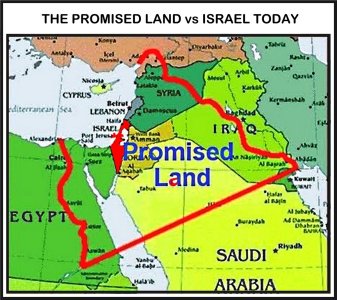
But wait. This is the land God Promised Abraham:

18 In the same day the LORD made a covenant with Abram, saying, Unto thy seed have I given this land, from the river of Egypt unto the great river, the river Euphrates:
19 The Kenites, and the Kenizzites, and the Kadmonites,
20 And the Hittites, and the Perizzites, and the Rephaims,
21 And the Amorites, and the Canaanites, and the Girgashites, and the Jebusites.
Genesis 15:18–21.

This is what it looks like on a map:


Greater Israel 2.jpg

Nope. You are wrong.
Again.
 
So, Joshua conquered all the land God promised Abraham? Let's check that:
View attachment 629

But wait. This is the land God Promised Abraham:

18 In the same day the LORD made a covenant with Abram, saying, Unto thy seed have I given this land, from the river of Egypt unto the great river, the river Euphrates:
19 The Kenites, and the Kenizzites, and the Kadmonites,
20 And the Hittites, and the Perizzites, and the Rephaims,
21 And the Amorites, and the Canaanites, and the Girgashites, and the Jebusites.
Genesis 15:18–21.

This is what it looks like on a map:


View attachment 630

Nope. You are wrong.
Again.
So you think God lied

Those are not my words

Joshua 21:43–45 (NIV) — 43 So the LORD gave Israel all the land he had sworn to give their ancestors, and they took possession of it and settled there. 44 The LORD gave them rest on every side, just as he had sworn to their ancestors. Not one of their enemies withstood them; the LORD gave all their enemies into their hands. 45 Not one of all the LORD’s good promises to Israel failed; every one was fulfilled.

And no one stated anything about today

The book of Joshua is not about today

Removal from the land was a judgment
 
So you think God lied

Those are not my words

Joshua 21:43–45 (NIV) — 43 So the LORD gave Israel all the land he had sworn to give their ancestors, and they took possession of it and settled there. 44 The LORD gave them rest on every side, just as he had sworn to their ancestors. Not one of their enemies withstood them; the LORD gave all their enemies into their hands. 45 Not one of all the LORD’s good promises to Israel failed; every one was fulfilled.

And no one stated anything about today

The book of Joshua is not about today

Removal from the land was a judgment
So, Joshua conquered all the land God promised Abraham? Let's check that:
View attachment 629

But wait. This is the land God Promised Abraham:

18 In the same day the LORD made a covenant with Abram, saying, Unto thy seed have I given this land, from the river of Egypt unto the great river, the river Euphrates:
19 The Kenites, and the Kenizzites, and the Kadmonites,
20 And the Hittites, and the Perizzites, and the Rephaims,
21 And the Amorites, and the Canaanites, and the Girgashites, and the Jebusites.
Genesis 15:18–21.

This is what it looks like on a map:


View attachment 630

Nope. You are wrong.
Again.
 
So, Joshua conquered all the land God promised Abraham? Let's check that:
View attachment 629

But wait. This is the land God Promised Abraham:

18 In the same day the LORD made a covenant with Abram, saying, Unto thy seed have I given this land, from the river of Egypt unto the great river, the river Euphrates:
19 The Kenites, and the Kenizzites, and the Kadmonites,
20 And the Hittites, and the Perizzites, and the Rephaims,
21 And the Amorites, and the Canaanites, and the Girgashites, and the Jebusites.
Genesis 15:18–21.

This is what it looks like on a map:


View attachment 630

Nope. You are wrong.
Again.
Can you read

Joshua 21:43–45 (NIV) — 43 So the LORD gave Israel all the land he had sworn to give their ancestors, and they took possession of it and settled there. 44 The LORD gave them rest on every side, just as he had sworn to their ancestors. Not one of their enemies withstood them; the LORD gave all their enemies into their hands. 45 Not one of all the LORD’s good promises to Israel failed; every one was fulfilled.

Scripture is inspired your attachments are not
 
He doesn't say "whosoever" to mean "anyone," He says "whosoever" in context to the Hebrews He is speaking to.
"Whosoever of you Hebrews/Jews" is the correct rendering from Greek to English.
And I KNOW WHO'S name is written in the Lamb's book of Life.
Mine.
And a couple of other brethren I know.

For the promise that he would be the heir of the world was not to Abraham or to his seed through the law, but through the righteousness of faith. For if those who are of the law are heirs, faith is made void and the promise made of no effect, because the law brings about wrath; for where there is no law there is no transgression.

Therefore it is of faith that it might be according to grace, so that the promise might be [d]sure to all the seed, not only to those who are of the law, but also to those who are of the faith of Abraham, who is the father of us all (as it is written, “I have made you a father of many nations”) in the presence of Him whom he believed—God, who gives life to the dead and calls those things which do not exist as though they did;


He was in the world, and the world was made through Him, and the world did not know Him. He came to His [c]own, and His own did not receive Him. But as many as received Him, to them He gave the right to become children of God, to those who believe in His name: who were born, not of blood, nor of the will of the flesh, nor of the will of man, but of God.
 
Back
Top Bottom