John 6:29JESUS Says that you are to "believe in Him" same as you would in God.
Do you???
Jesus answered, “This is the work of God: that you believe [adhere to, trust in, rely on, and have faith] in the One whom He has sent.

John 6:29JESUS Says that you are to "believe in Him" same as you would in God.
Do you???
The false trinity god that was created at the councils in the 4th century. Its recorded history fact=325 ce( council of Nicea) Jesus was added to a 2 headed god, 381 ce( council of Constantinople) the holy spirit was added to make a trinity) thus no trinity was ever served prior.Please explain what this "darkness" is........
Believe he is the one sent by God=The Messiah-The Israelite spiritual leaders refused to believe that.JESUS Says that you are to "believe in Him" same as you would in God.
Do you???

How many Elohim are identified in these words of the Lord Jesus Christ = John 14:15-17The false trinity god that was created at the councils in the 4th century. Its recorded history fact=325 ce( council of Nicea) Jesus was added to a 2 headed god, 381 ce( council of Constantinople) the holy spirit was added to make a trinity) thus no trinity was ever served prior.
The Apostles received and accepted and taught the doctrine of the blessed TrinityThe false trinity god that was created at the councils in the 4th century. Its recorded history fact=325 ce( council of Nicea) Jesus was added to a 2 headed god, 381 ce( council of Constantinople) the holy spirit was added to make a trinity) thus no trinity was ever served prior.
Here is Paul warning all 1Cor 8:5-6, that there are many false gods and names only the Father as God. Thus your reasoning is false. So explain to all of us why he didn't name a trinity there?The Apostles received and accepted and taught the doctrine of the blessed Trinity

Hope I can actually teach you something you may not be aware of here.I explained to you-The Word is not called capitol G God in any Greek manuscript known. Catholicism translated the capitol G God to the Word. ALL trinity bibles are done out of Catholicism translating.
Yes fact= satan at 2 Cor 4:4-The Word at John 1:1=Theos=god--While both spots the true living God is called Ho Theos= The God. The Word is not called The God.Hope I can actually teach you something you may not be aware of here.
If you do not want to read the first part of this, I suggest you at least scroll to the last part where there are many Greek scholars (even non-religious ones) explain why the grammar of John 1:1 is one of the most debated sentences in ancient Greek literature. It’s actually a lot more complex than most people realize.
This is a real and often hotly debated issue in Bible translation and theology, especially around Gospel of John 1:1. But first there are some facts that all should read, including yourself, to refresh what we know or think we do.
Before I start... TRIVIA TIME....
Wiki says this about the earliest manuscript of John 1:1..
Papyrus 75
Handwritten copy of the Bible in Greek
Papyrus 75, is an early Greek New Testament manuscript written on papyrus containing text from the Gospel of Luke 3:18–24:53, and John 1:1–15:8. It is designated by the siglum 𝔓⁷⁵ in the Gregory-Aland numbering of New Testament manuscripts Continued in Wikipedia
Now, Starting with what actually the Greek Manuscripts say.
1. What the Greek Manuscripts Actually Say
The earliest Greek text of John 1:1 reads:
Ἐν ἀρχῇ ἦν ὁ λόγος
καὶ ὁ λόγος ἦν πρὸς τὸν θεόν
καὶ θεὸς ἦν ὁ λόγος
Transliteration:
En archē ēn ho logos, kai ho logos ēn pros ton theon, kai theos ēn ho logos.
Literal word order is
“In the beginning was the Word,
and the Word was with the God,
and God / divine was the Word.”
Key points are,
Greek manuscripts originally used all capital letters (uncials). (Remember this)
There was no distinction between capital G or lowercase g. (Remember this)
The word used is θεός (theos) — meaning God, a god, or divine, depending on context. ( this is most important for all to remember)
So in a way you are correct in one sense:
The manuscripts themselves do not contain a capital “G” because Greek writing at the time didn’t use capitalization the way modern English does.
So then , Why do Most bibles translate "the Word was God?
Most translations render the last clause as...
“the Word was God.”
This interpretation comes from Greek grammar... (You have to learn this truth.)
θεός (theos) appears without the article (“the”).
Greek often omits the article when describing nature or essence.
Therefore, many scholars interpret it as meaning:
“the Word had the nature of God”or “the Word was divine.”
This understanding became part of Trinitarian theology, especially after debates in the early church.
But we need to address the elephant in the forum and that is did Catholicism creat the Trinity Translation???? AND THE ANSWER IS........
Not exactly.
The doctrine of the Trinity developed in early Christianity and was formally defined at the:
(Yippee ... I found out how to bullet point on here............!)
- First Council of Nicaea (325 AD) AND
- First Council of Constantinople (381 AD)
These councils occurred within the early church that later became associated with Catholic Church, but the Greek text of John already existed long before those councils.
The translation “the Word was God” appears in many later translations including
pay attention.................................................
- King James Version
- New International Version
- English Standard Version
But translators used the same Greek manuscripts, not a separate Catholic text.
Since I know you do not care why some groups translate it differently because you only trust what you have been told without doing your own research into things, there are other who may be wondering where things originated so I will go on.
Yet you just might find this to be of interest.
Some translators argue the phrase could mean that “the Word was a god” or that “the Word was divine”
We all know the New World Translation renders it “the Word was a god.”
We also all know this interpretation usually comes from non-Trinitarian theology.
We can sum things up this way, so far.
(Oops. it did not work this time)
- The Greek manuscripts do not contain capital letters distinguishing God vs god.
- The word used is θεός (theos).
- English translators choose “God,” “divine,” or “a god” based on grammar and theology.
- The debate is about interpretation, not the existence of a different manuscript.
And we all also know the debate will go on.
_______________________________________________________________________________________
PART TWO.
Here are some well-known Greek scholars who have specifically discussed the grammar of Gospel of John 1:1 and the phrase “θεὸς ἦν ὁ λόγος” (theos ēn ho logos). This verse has been analyzed by experts in Koine Greek for over a century.
1.
A major Greek grammarian who studied how Greek nouns without the article function.
He formulated Colwell’s Rule, which states:
A predicate noun that comes before the verb usually does not have the article, even when it is definite.
When applying this to John 1:1:
θεὸς (theos) comes before ἦν (was)
So the absence of “the” does not necessarily mean “a god.”
Colwell concluded the phrase means:
“the Word was God.”
2.
A respected New Testament Greek scholar.
After studying similar Greek constructions, he wrote that the verse is primarily qualitative.
His conclusion.....
“The clause means that the Logos had the nature of God.”
So instead of emphasizing identity, it emphasizes quality or nature.
3.
A modern Greek grammar expert and professor.
He argues the phrase describes the nature of the Word.
His explanation:
“The Word was fully God in essence.”
But he also notes that the structure distinguishes the Word from “the God” (the Father) earlier in the verse.
4.
A scholar often cited by non-Trinitarian interpreters.
He argued that grammatically “the Word was divine” may be the most neutral translation.
His view shows that even scholars disagree, though they are working from the same Greek text.
Important point scholars agree on
Nearly all Greek scholars—Trinitarian or not—agree on these facts:
- The Greek manuscripts read θεὸς ἦν ὁ λόγος.
- Greek did not originally use capital/lowercase distinctions like English.
- The debate is how to interpret the grammar, not about different manuscripts.
The following is also important....
Literal structure of the verse
“In the beginning was the Word,
and the Word was with the God,
and God/divine was the Word.”
I also could show you something fascinating that surprises many people about
There are about 8–10 possible ways Greek grammar could be translated in that final phrase, and early Christian writers debated it long before modern denominations existed.
But will save that for another time
The apostle Paul did in fact name the Trinity = more then once!!!Here is Paul warning all 1Cor 8:5-6, that there are many false gods and names only the Father as God. Thus your reasoning is false. So explain to all of us why he didn't name a trinity there?
Do you know why?Yes fact= satan at 2 Cor 4:4-The Word at John 1:1=Theos=god--While both spots the true living God is called Ho Theos= The God. The Word is not called The God.

Here we see“The three days which were before the luminaries are types of the Trinity — of God, and His Word, and His Wisdom.”
(To Autolycus, Book 2, Chapter 15)

“Baptize in the name of the Father and of the Son and of the Holy Spirit.”
Catholicism put Capitol G God to the Word. Satan owns Catholicism from its beginning( 2Thess 2:3)The apostle Paul did in fact name the Trinity = more then once!!!
There is one body, and one Spirit, even as ye are called in one hope of your calling; 5One Lord, one faith, one baptism, 6One God and Father of all, who is above all, and through all, and in you all.
You, however, are controlled not by the flesh, but by the Spirit, if the Spirit of God lives in you. And if anyone does not have the Spirit of Christ, he does not belong to Christ.
herefore concerning the eating of things offered to idols, we know that an idol is nothing in the world, and that there is no other God but one. 5For even if there are so-called gods, whether in heaven or on earth (as there are many gods and many lords), 6yet for us there is one God, the Father, of whom are all things, and we for Him; and one Lord Jesus Christ, through whom are all things, and through whom we live.
Apostle John declared the Trinity in his opening sentence of the Gospel
In the beginning was the Word, and the Word was with God, and the Word was God.
2Thess 2:3 arose in the 2nd century--thats who you quote.Do you know why?
It is because he is a SEPARATE INDIVIDUAL in the GODHEAD.
Do you know what the Godhead is?
It refers to the divine nature or essence of God. It signifies the substance or essence of God.
Have you not heard it often said that the Son is the very essence of the Father?
Do you know what it means? This essence sharing thing?
It means the Son is of the same essence as the Father, meaning they share the same divine nature.
Now, to be certain that we get well before anything that could be misconstrued as RCC thoughts... I will avoid even KJV , though they did mention the Godhead in 3 areas there.
First... look at sources well before Catholic Latin translations.
1. Ignatius of Antioch (about AD 107)
Ignatius of Antioch lived only a few decades after the apostles and was a disciple of the apostle John according to early tradition.
In his letter to the Ephesians he wrote:
“For our God, Jesus Christ, was conceived by Mary according to God's plan.”
(Letter to the Ephesians 18:2)
He also wrote:
“There is one physician, both flesh and spirit… God existing in flesh.”
This is around AD 107, about 1500 years before the KJV.
Sensing your continued doubt look what Justin Martyr wrote:
2. Justin Martyr (about AD 150)
Justin Martyr wrote in Greek around AD 150.
He explained that Christ existed before becoming man and shared the divine nature.
He wrote:
“The Word… who is the first-begotten of God, is also God.”
Justin also identified Jesus as the “Lord” who appeared in the Old Testament.
Again, this is 1400+ years before the KJV.
3. Tertullian (about AD 200)
Ah Tertullian... Always wanted to name a puppy Tertullian (or Polycarpe) but then looking at
this face was afraid the pup would grow up looking mean....
I digress........
Tertullian lived around AD 155–220.
He is the first writer to use the word “Trinity” (Trinitas) and described the relationship within the Godhead as:
“One substance, three persons.”
He wrote this while defending Christianity against false teachings.
Again, this is 1300 years before the KJV.
NOW, lets look at
4. Even Earlier — The New Testament Itself
The doctrine of the divine nature of Christ is already in the original Greek New Testament:
Examples can be found in
John 1:1 ~ “The Word was God”
John 20:28 ~ Thomas says to Jesus, “My Lord and my God.”
Colossians 2:9 ~“In him dwells all the fullness of the Godhead bodily.”
These were written roughly AD 50–95, long before any Catholic translation debates.
The belief that Jesus is divine did not come from the King James Version or later Catholic translations. Christians were already calling Jesus God within decades of the apostles. Ignatius of Antioch wrote around AD 107 referring to “our God, Jesus Christ.” Polycarp, a disciple of the apostle John, taught the same faith. Even the Roman governor Pliny wrote in AD 112 that Christians sang hymns to Christ as to a god. These sources existed over 1500 years before the KJV, showing that belief in the divine nature of Christ came from the earliest Christians themselves.
If you have read this far here is something I bet you have never read....
There is a second-century Christian writing that actually explains the Father, Son, and Spirit together — basically describing the Godhead nearly 200 years before the Trinity doctrine was formalized.
Theophilus of Antioch (about AD 180)
Theophilus of Antioch was bishop of Antioch around AD 170–185.
In his work To Autolycus he wrote something remarkable. He explained that the three days before the sun and moon were created in Genesis symbolized three divine realities.
He wrote:
Here we see
1. God = the Father
2. Word (Logos) = the Son
3. Wisdom = the Holy Spirit
This is one of the earliest recorded uses of the word Trinity (Greek: Trias).
And it was written around AD 180, roughly 1400 years before the King James Version.
The later councils didn't invent the belief ,they clarified the language because false teachings were spreading.
Now, I assume you are not reading this far but in case you are the following you will argue is no proof because many discount the document this is i but....
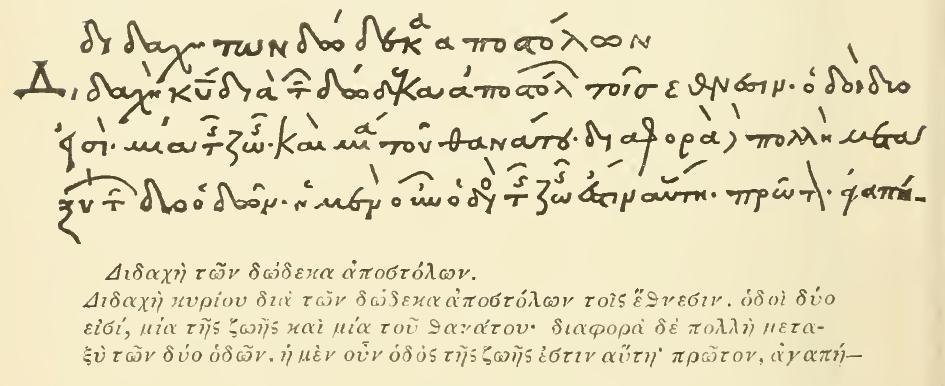
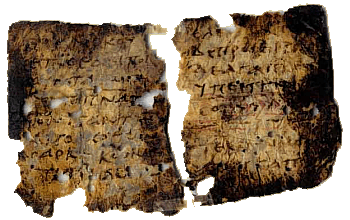
There is a Christian document from about AD 90–100 that many scholars believe may be older than some New Testament books, and it describes Father, Son, and Holy Spirit in worship and baptism.
It is called the Didache, and it is very powerful evidence.
The Didache (about AD 90–100)
The Didache (meaning “Teaching”) is one of the earliest Christian writings outside the New Testament. Many scholars date it to AD 90–100, possibly even earlier.
It was a manual for early Christian churches explaining how believers should live, worship, and baptize.
What makes it important for your discussion is how it describes baptism.
The Baptism Instruction
The Didache says:
This matches exactly what Jesus commanded in Matthew 28:19.
So within the first century, Christians were already baptizing using Father, Son, and Holy Spirit together.
This shows that not only the threefold formula (Father, Son, Holy Spirit) was used very early, but that
It existed centuries before Catholic theological debates. and It predates the King James Version by about 1500 years.
In other words, the belief that these three belong together in Christian faith and worship comes from the earliest church, not later translation traditions.
My last comment today on this is from the Syriac Bible, which existed many centuries before the King James Version and developed in the Eastern church, not the Roman Catholic church.
It is
The Peshitta (Syriac Bible)
You will find a link to this in my signature. Nothing I do is ever done without reference to here,
The Peshitta is the Bible used by Syriac-speaking Christians.
Why is this important......?
The New Testament was translated around AD 150–200.
It was written in Syriac (a dialect of Aramaic).
It was used in churches in Syria, Mesopotamia, and Persia.
It developed outside the Roman Catholic Church.
That means it existed about 1400 years before the 1611 King James Version.
Now read What the Peshitta Says About Christ!
The Peshitta still contains the same teachings about Christ's divine nature.
For example:
John 1:1 “In the beginning was the Word, and the Word was with God, and the Word was God.”
John 20:28 Thomas says to Jesus: “My Lord and my God.”
Colossians 2:9 “In Him dwells all the fullness of the Godhead bodily.”
So even in a very early Eastern translation, the same teachings appear.
There is just so much "proof"....
The belief that Jesus shares the divine nature did not originate with later translations like the King James Version. Around AD 180, the Christian bishop Irenaeus quoted John 1:1 and wrote that “the Word of God is Himself God.” Irenaeus had learned the Christian faith from Polycarp, who was a disciple of the apostle John. This shows that the understanding of Christ’s divine nature was being taught within two generations of the apostles, long before later church councils or English Bible translations.
Okay, I'll stop because I believe by now I have lost my entire audience.
So you force me to repeat what I said above.Catholicism put Capitol G God to the Word. Satan owns Catholicism from its beginning( 2Thess 2:3)
RCC is EVILCatholicism put Capitol G God to the Word. Satan owns Catholicism from its beginning( 2Thess 2:3)
same Paul called Jesus Kyrios, which in the LLx quoted from was term used for Yahweh God of the OTHere is Paul warning all 1Cor 8:5-6, that there are many false gods and names only the Father as God. Thus your reasoning is false. So explain to all of us why he didn't name a trinity there?
It doesn't matter what was in the Greek language--There is capitol G God and small g god( 2 Cor 4:4)--The Word got the same Greek word satan got at 2 Cor 4:4-While the true God got a different word.RCC is EVIL
But we are not speaking about catholicism.
The Apostle John who wrote "the Word was God" 300 years before the Roman Catholic church ever existed.
The LORD Jesus Christ, The Apostle John and myself REJECT the idolatrous anti-christ practices of the RCC.
Any religion which denies and/or corrupts the Gospel of John is deceived/rejected = this includes jw religion
You cannot prove that, No originals exist. Only Catholicism translating remained of NT when the protestants translated. Very few minor fragments are older, None of John 1:1RCC is EVIL
But we are not speaking about catholicism.
The Apostle John who wrote "the Word was God" 300 years before the Roman Catholic church ever existed.
The LORD Jesus Christ, The Apostle John and myself REJECT the idolatrous anti-christ practices of the RCC.
Any religion which denies and/or corrupts the Gospel of John is deceived/rejected = this includes jw religion
LORD was not in the Hebrew texts-YHVH, or YHWH was in every one of those spots. Your reasoning is false.same Paul called Jesus Kyrios, which in the LLx quoted from was term used for Yahweh God of the OT
What matters is where and in whom you are placing your faith/trust in!!!It doesn't matter what was in the Greek language--There is capitol G God and small g god( 2 Cor 4:4)--The Word got the same Greek word satan got at 2 Cor 4:4-While the true God got a different word.
It was Proven in GenesisYou cannot prove that, No originals exist. Only Catholicism translating remained of NT when the protestants translated. Very few minor fragments are older, None of John 1:1


